

 русский
 Español
 عربى
عربى
AMR Robots in Manufacturing: How Autonomous Mobile Robots Transform Factories
 2026.04.09
 Industry News
Content
What Is an AMR Robot?
An Autonomous Mobile Robot (AMR) is a self-navigating machine that moves through industrial environments without human intervention or fixed infrastructure. Unlike older automation systems, AMRs build and interpret a live map of their surroundings using a combination of LiDAR sensors, cameras, ultrasonic detectors, and onboard AI — allowing them to plan routes, detect obstacles, and adapt in real time.
The most important distinction in modern factory automation is the one between AMRs and Automated Guided Vehicles (AGVs). AGVs follow fixed paths defined by magnetic tape, wires, or floor markers. If a pallet blocks the route, an AGV stops and waits. An AMR, by contrast, recalculates an alternative path and continues moving. This behavioral difference — reactive versus adaptive — is what makes AMRs far better suited to the dynamic conditions inside a working manufacturing plant.
At the core of every AMR is a navigation stack built around Simultaneous Localization and Mapping (SLAM). The robot continuously cross-references its sensor data against an internal map, locating itself with centimeter-level precision even as workers, forklifts, and equipment move around it. When layouts change — a new production cell is added, a storage zone is relocated — the AMR simply re-maps the area without any physical modification to the floor.
How AMRs Work in Manufacturing Environments
In a manufacturing facility, an AMR does not operate in isolation. It functions as a node within a connected automation ecosystem. Fleet management software dispatches individual robots in response to production demand signals, assigning tasks based on priority, robot availability, and current traffic patterns across the floor.
The most capable deployments integrate AMRs directly with Manufacturing Execution Systems (MES) and Enterprise Resource Planning (ERP) platforms. When a production line signals that it needs raw material replenishment, the MES can automatically trigger an AMR dispatch — no manual request required. The robot navigates to the storage location, picks up the load, and delivers it to the lineside station, logging the transaction in the ERP in real time. For a deeper look at AMRs in warehouse operations, including goods-to-person models and autonomous pallet handling, the underlying navigation principles are directly transferable to manufacturing floor logistics.
Modern AMR fleets also handle multi-robot traffic management autonomously. When two robots approach the same corridor from different directions, the fleet software applies priority rules and spacing algorithms to prevent deadlocks — a problem that manual forklift traffic creates constantly and that fixed AGV networks cannot resolve without human intervention.
Key Applications of AMRs in Manufacturing
The range of tasks AMRs perform inside manufacturing plants has expanded significantly as the technology has matured. The most established applications include:
- Lineside replenishment: AMRs transport components and subassemblies from central storage to production workstations on a just-in-time basis, eliminating the need for operators to leave their stations to retrieve material.
- Machine tending and inter-process transfer: In machining and fabrication environments, AMRs move work-in-progress between CNC machines, cutting stations, and finishing areas, maintaining a continuous flow without forklift dependency.
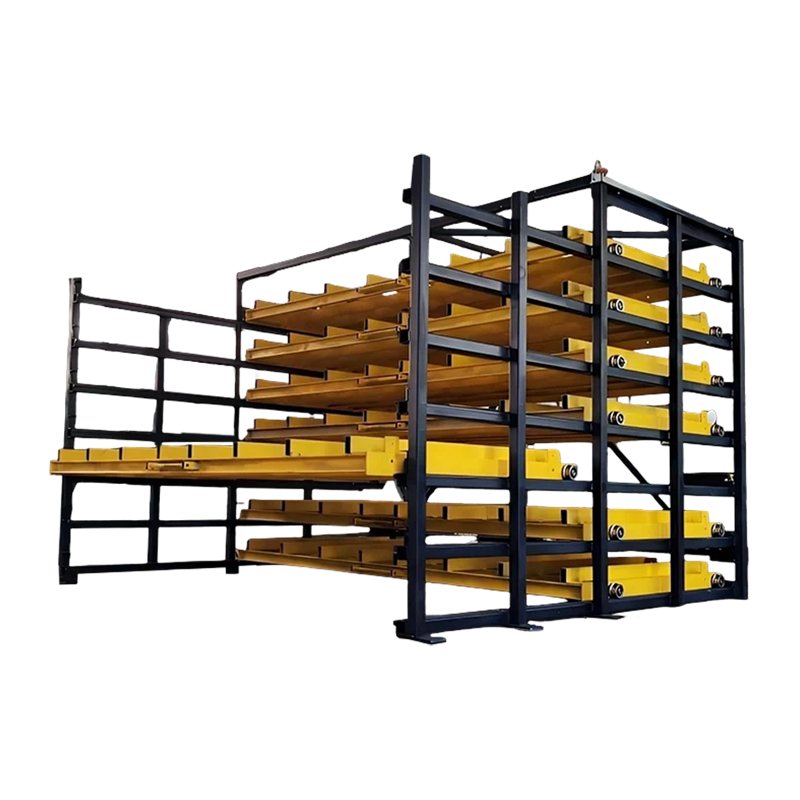
- Metal sheet and tube transport: Facilities processing large-format sheet metal or structural tubing face particular material handling challenges. AMRs equipped with appropriate fixtures or integrated with automated loading arms can transport these materials between storage systems, laser cutters, press brakes, and bending machines safely and consistently.
- Finished goods removal: At the end of production lines, AMRs collect completed parts or assemblies and deliver them to packaging, inspection, or despatch staging areas, removing a bottleneck that commonly limits line throughput.
- Hazardous environment operation: In areas involving heavy presses, sharp metal offcuts, or surface treatment chemicals, AMRs replace human material handlers in the highest-risk zones, reducing workplace injury rates measurably.
In automotive and heavy manufacturing, AMRs capable of carrying payloads exceeding 1,000 kg are now routinely used to transport engine blocks, chassis components, and large stamped parts — tasks that previously required dedicated forklift operators assigned solely to internal logistics.
The Business Case: Efficiency, Safety, and ROI
The financial argument for AMR deployment in manufacturing is increasingly straightforward. Labor costs for internal logistics — material handlers, forklift operators, replenishment staff — represent a significant and growing proportion of total manufacturing overhead, particularly as skilled labor markets tighten across industrial regions worldwide.
AMRs operate continuously across multiple shifts without fatigue, breaks, or the variability that characterizes human material handling. Facilities report throughput improvements in the range of 30–50% for internal material flow after AMR deployment, with the most significant gains coming from the elimination of production stoppages caused by late material delivery.
Safety is a parallel benefit with direct financial consequences. Forklift-related incidents in manufacturing environments account for a disproportionate share of workplace injuries and associated costs — insurance premiums, downtime, regulatory exposure. AMRs navigate with certified safety systems that bring them to a controlled stop before any contact with personnel, and their consistent behavior eliminates the human error factor that underlies most industrial transport accidents.
Return on investment timelines for manufacturing AMR deployments typically fall between six months and two years, depending on shift patterns, labor costs, and the complexity of the integration. For an evidence-based review of how collaborative robotics and AMR ROI is calculated across warehousing and manufacturing contexts, the key variables are labor displacement, throughput gain, and safety cost reduction — all of which compound positively over the asset's operational life.
| Metric | Typical Outcome |
|---|---|
| Internal throughput improvement | 30–50% |
| ROI payback period | 6–24 months |
| Reduction in material handling incidents | Up to 80% |
| Operational availability | Up to 24/7 across multi-shift operations |
AMRs and Intelligent Metal Storage: A Powerful Combination
For manufacturers in the metal processing sector — sheet metal fabrication, CNC machining, structural steel production — the integration of AMRs with intelligent vertical storage systems represents one of the most impactful automation investments currently available.
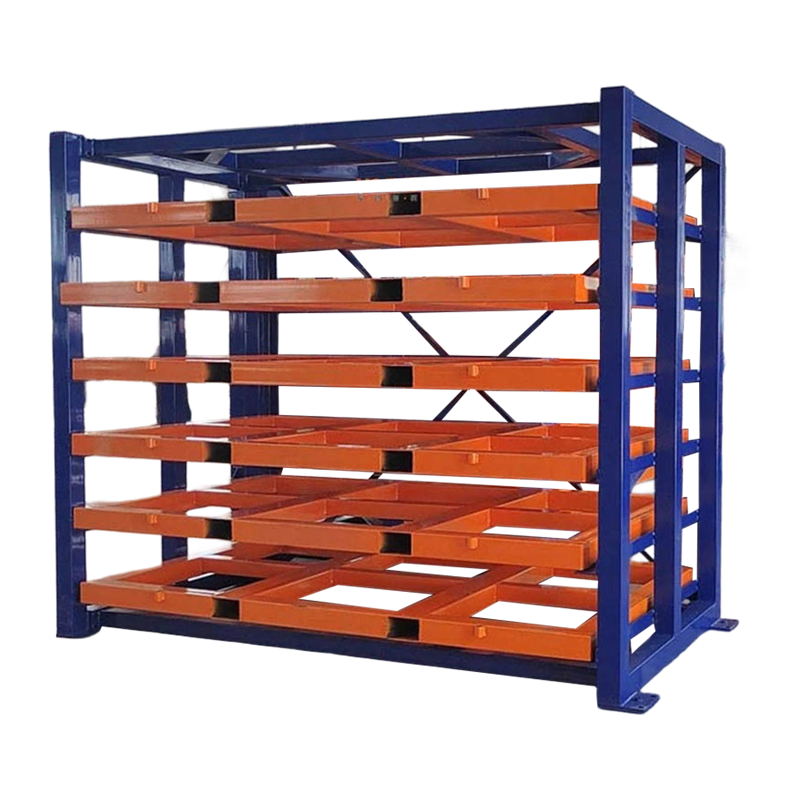
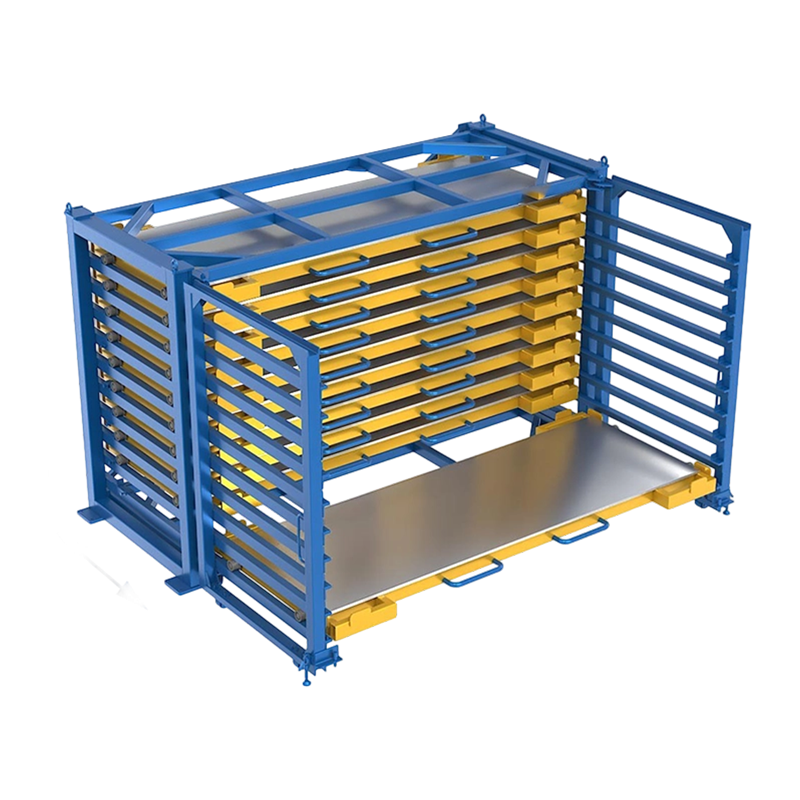
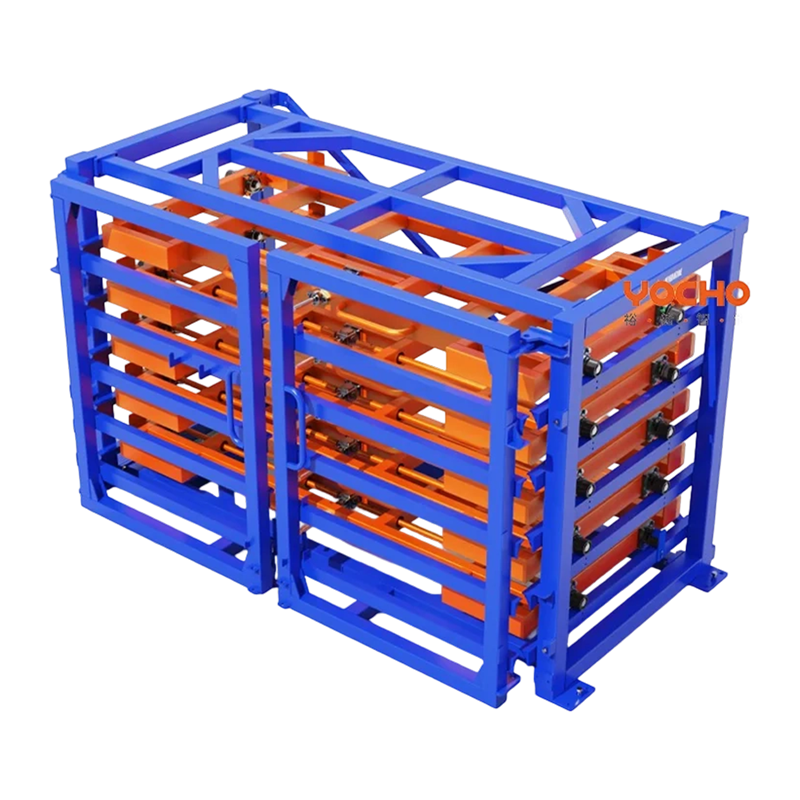
Vertical tower storage systems and automated sheet metal racks dramatically increase storage density and retrieval speed for large-format materials. When these systems are connected to AMR fleets, the result is a fully automated material flow: the storage system retrieves the correct sheet or tube profile on demand, and the AMR transfers it directly to the designated cutting or forming machine without human involvement at any stage.
This closed-loop automation eliminates three of the most common bottlenecks in metal processing: waiting time for material retrieval, transport delays between storage and production, and the errors introduced by manual material identification and handling. In facilities running multiple material types and thickness specifications simultaneously, the accuracy improvement alone — AMRs and automated storage systems do not misidentify materials — has significant quality and yield implications.
YOCHO's intelligent storage solutions are engineered specifically for the metal cutting and processing industry, designed to integrate with the automated material flow systems that AMR deployments require. From vertical roll-out sheet racks to automated loading and unloading equipment, YOCHO storage infrastructure provides the fixed-point interface that AMR fleets need to operate at maximum efficiency — a structured, consistent handoff point that allows robots to pick up and deliver materials without variability.
Is Your Facility Ready for AMR Integration?
Deploying AMRs in a manufacturing environment does not require a ground-up facility redesign. Unlike AGVs, AMRs need no floor modifications, no magnetic strips, and no dedicated corridors. The primary infrastructure requirement is a reliable WiFi or private 5G network for fleet management communication, and sufficient aisle width for the robot models selected — typically 1.2 to 1.5 meters for standard payload AMRs.
The more important readiness question is operational: are your material flows consistent enough to define repeatable tasks, and do you have the data — inventory movements, replenishment cycles, machine cycle times — to configure an AMR fleet intelligently? Facilities with well-documented internal logistics processes deploy AMRs faster and realize ROI sooner than those where material flow is ad hoc.
For metal processing manufacturers considering their next step in production automation, the combination of intelligent storage systems and AMR material handling provides a scalable foundation that grows with output requirements. Starting with a pilot deployment on a single production cell or storage zone allows teams to develop operational competence and measure results before scaling across the facility.
Contact YOCHO to discuss how our intelligent metal storage solutions can be configured to support AMR integration in your facility — and to request a free warehouse diagnosis and storage layout design consultation.

If you are interested in our products, please consult us
PRODUCTS
NEWS CENTER
MOBILE TERMINAL

CONTACT US
- ADDRESS: Room 205, Office Building, Shandong Yurui Machinery Group Co., Ltd., at the intersection of Banqiao Road and Huangjin Road, Pingyi Street, Pingyi County, Linyi City, Shandong Province.
- PHONE: +86-19819101584
- EMAIL: [email protected]
Linyi Yocho Storage Intelligent Manufacturing Co.,Ltd. ALL RIGHTS RESERVED. ALL RESERVED. Warehouse Rack Manufacturers Warehouse Shelves Factory
