

 русский
 Español
 عربى
عربى
Long Material Storage Rack Guide: Types & Selection
 2026.07.02
 Industry News
Content
Maximizing Efficiency with Long Material Storage Racks
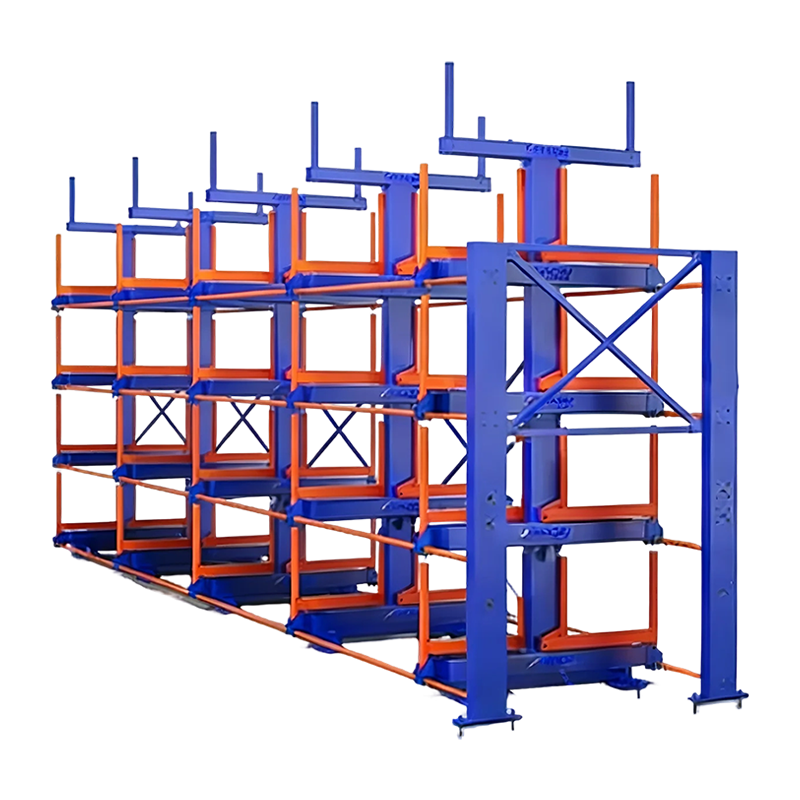
Long material storage racks, particularly cantilever systems, are the most effective solution for storing elongated items like pipes, lumber, and steel beams. Unlike traditional pallet racking, these specialized structures eliminate vertical obstructions, allowing for easy side-loading and unloading of bulky goods. This design not only accelerates handling times but also significantly reduces the risk of product damage during retrieval.
Implementing the right long material storage rack can increase warehouse storage density by up to 50% compared to floor stacking. By utilizing vertical space and organizing materials by length and type, businesses can streamline inventory management and improve overall operational safety. The key lies in selecting a system that matches the specific weight and dimensions of the stored items.
Core Benefits of Specialized Long Storage
- Unobstructed Access: No front columns mean forklifts can approach from any angle, simplifying the loading of irregular lengths.
- Space Optimization: Vertical utilization allows for high-density storage of long items that would otherwise occupy excessive floor space.
- Damage Reduction: Materials are supported evenly across arms, preventing bending or warping common in floor stacks.
Understanding Cantilever Rack Configurations
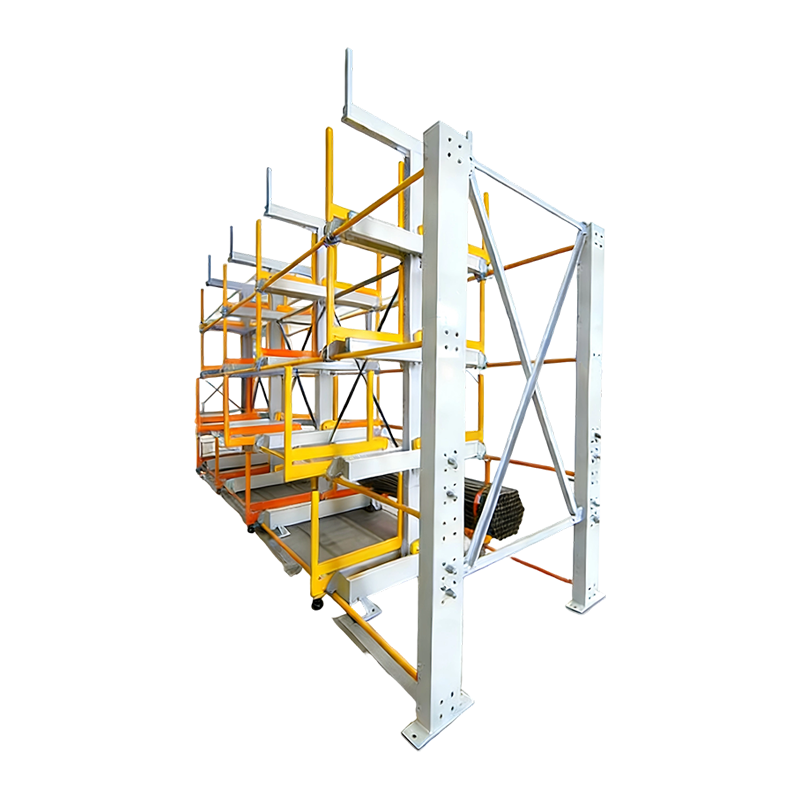
Cantilever racks are the industry standard for long material storage, featuring a central column with horizontal arms extending outward. These systems come in two primary configurations: single-sided and double-sided. Single-sided units are ideal for placement against walls, while double-sided racks maximize floor space in the center of a warehouse aisle.
Structural Components
| Component | Function | Key Consideration |
|---|---|---|
| Base | Provides stability and anchors the unit | Must be bolted to concrete floor |
| Column | Vertical support for arms | Height determines max storage level |
| Arms | Horizontal supports for materials | Length and capacity must match load |
| Bracing | Connects columns for rigidity | Diagonal and horizontal braces prevent sway |
Roll Formed vs. Structural Steel
Choosing between roll-formed and structural steel depends on the weight of the materials being stored. Roll-formed cantilevers are lighter and more cost-effective, suitable for loads up to 2,000 lbs per arm. For heavy industrial applications involving steel pipes or timber bundles exceeding 5,000 lbs per arm, structural steel cantilevers are required due to their superior strength and durability under high stress.
Load Capacity and Safety Standards
Safety is paramount when dealing with heavy, long materials. Adhering to load capacity limits and proper installation guidelines prevents catastrophic failures. Each component of the rack has a specific weight rating, and the total system capacity is determined by the weakest link, often the arm-to-column connection.
Calculating Load Requirements
To determine the necessary capacity, calculate the total weight of the bundle and divide it by the number of arms supporting it. Always include a safety margin of at least 20%. For example, if a bundle weighs 4,000 lbs and rests on four arms, each arm must handle 1,000 lbs. Therefore, selecting arms rated for 1,200 lbs or more ensures safe operation. Never exceed the manufacturer's specified uniform load capacity, as point loads can cause immediate deformation.
Anchoring and Stability
Proper anchoring is critical for cantilever racks because they lack front supports. The base must be secured to the concrete floor using high-strength anchor bolts. Regular inspections should check for loose anchors or cracks in the concrete, which can compromise stability. Additionally, seismic bracing may be required in earthquake-prone regions to meet local building codes and ensure structural integrity during ground movement.
Optimizing Warehouse Layout and Workflow
Efficient placement of long material storage racks can dramatically improve workflow. Aisles should be wide enough to accommodate the longest items being stored plus the turning radius of handling equipment. Typically, this means aisles need to be at least 12-15 feet wide for standard forklifts, though narrow-aisle reach trucks can operate in spaces as tight as 8 feet.
Strategic Placement Tips
- Place high-turnover items at eye level or easily accessible heights to reduce retrieval time.
- Store heavier materials on lower levels to maintain a low center of gravity and enhance stability.
- Group similar lengths together to minimize wasted space and simplify inventory counts.
- Ensure clear signage indicating weight limits and item categories for quick identification.
Integration with Handling Equipment
The choice of forklift or crane affects rack design. Side-loaders are particularly effective for long material storage racks as they can pick up items parallel to the rack, requiring narrower aisles than counterbalance forklifts. Using specialized attachments like boom jibs or pole handlers can further enhance safety and efficiency when dealing with awkwardly shaped or extremely long items.
Maintenance and Inspection Protocols
Regular maintenance ensures the longevity and safety of long material storage racks. A comprehensive inspection schedule should be implemented, including daily visual checks by operators and annual professional audits. Look for signs of wear such as bent arms, cracked welds, or damaged bracing.
Common Issues and Solutions
- Bent Arms: Replace immediately if deformation exceeds 1/2 inch. Do not attempt to straighten, as this weakens the metal.
- Loose Anchors: Tighten or replace anchor bolts if movement is detected. Check concrete for spalling around the base.
- Missing Braces: Install replacements promptly to restore structural rigidity and prevent column buckling.
- Corrosion: Clean and repaint steel components if rust appears, especially in humid environments.
Keeping detailed records of inspections and repairs helps track the health of the storage system and complies with occupational safety regulations. Proactive maintenance can extend the life of a rack system by 10-15 years, providing a significant return on investment while ensuring a safe working environment for employees.


If you are interested in our products, please consult us
PRODUCTS
NEWS CENTER
MOBILE TERMINAL

CONTACT US
- ADDRESS: Room 205, Office Building, Shandong Yurui Machinery Group Co., Ltd., at the intersection of Banqiao Road and Huangjin Road, Pingyi Street, Pingyi County, Linyi City, Shandong Province.
- PHONE: +86-19819101584
- EMAIL: [email protected]
Linyi Yocho Storage Intelligent Manufacturing Co.,Ltd. ALL RIGHTS RESERVED. ALL RESERVED. Warehouse Rack Manufacturers Warehouse Shelves Factory
