

 русский
 Español
 عربى
عربى
Semi-Automated Warehouse: What It Is and Where to Start
 2026.07.20
 Industry News
Content
- 1 What "Semi-Automated" Actually Means for a Warehouse
- 2 Why Manufacturers Are Moving This Direction
- 3 Automated Storage: The Layer Most Facilities Start With
- 4 Loading and Unloading: Where Manual Labor Still Bottlenecks
- 5 What Semi-Automation Delivers in Practice
- 6 Planning the Transition: Where to Start
What "Semi-Automated" Actually Means for a Warehouse
Somewhere between a warehouse run entirely by forklift drivers and one where robots handle every pallet from dock to shelf sits the setup most manufacturing facilities actually operate: a semi-automated warehouse. Specific processes — often storage and retrieval, sometimes loading and unloading — run on automated equipment, while receiving, quality checks, and other tasks stay in human hands.
This isn't a compromise version of automation. It's a deliberate middle tier that lets a facility automate the steps where machines clearly outperform people — repetitive lifting, precise positioning, dense vertical storage — while keeping human judgment where it still matters most.
The distinction matters because "semi-automated" describes a spectrum, not a fixed configuration — a facility can automate one process today and add another next year without ripping out what already works.
Why Manufacturers Are Moving This Direction
Labor availability is the most immediate driver. Metal fabrication and sheet processing shops in particular rely on staff who can safely lift and position heavy, awkward materials, and that pool of workers has gotten harder to fill consistently. Automating the physically demanding parts of storage and handling reduces how much of the operation depends on having enough people on the floor every shift.
Cost is the second driver, and it explains why semi-automation rather than full automation is where most facilities land first. Industry-wide, supply chain leaders continue to expect growing adoption of robotics and automated handling equipment, according to the MHI Annual Industry Report's ongoing survey of supply chain investment priorities, and much of that spending goes toward targeted equipment rather than ground-up automated facilities.
Scalability closes the case. A single automated storage rack or loading manipulator can be installed alongside existing manual processes, proven out, and expanded — a far lower-risk path than committing to a fully automated build before the return on investment is clear.
Automated Storage: The Layer Most Facilities Start With
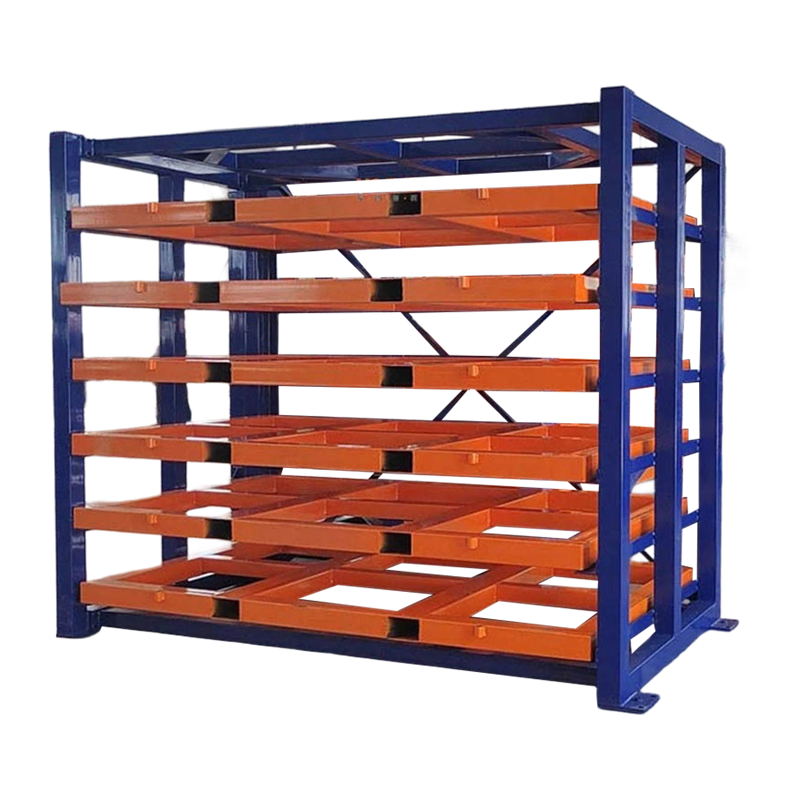
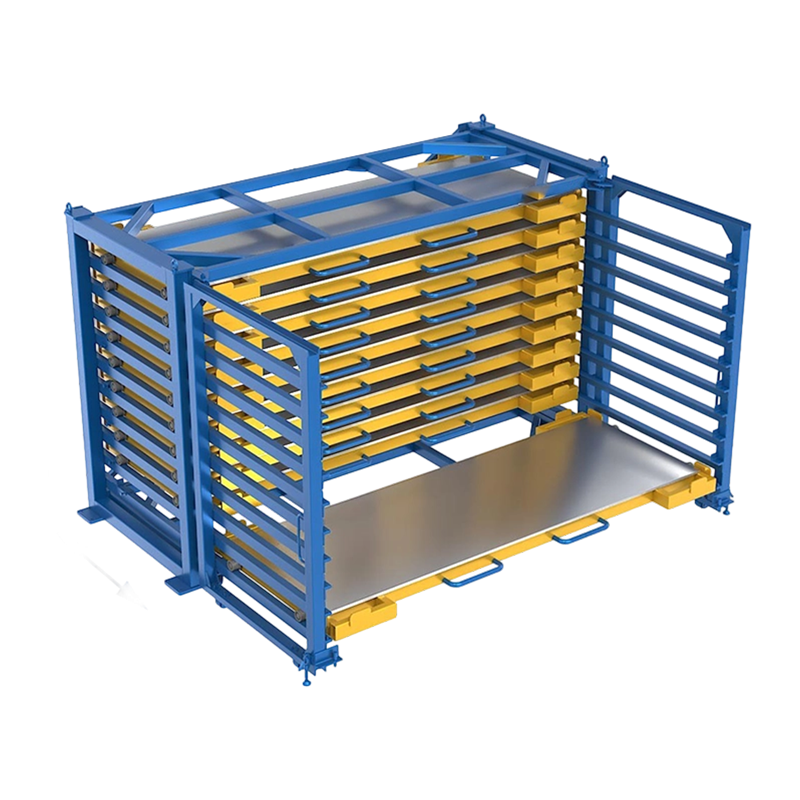
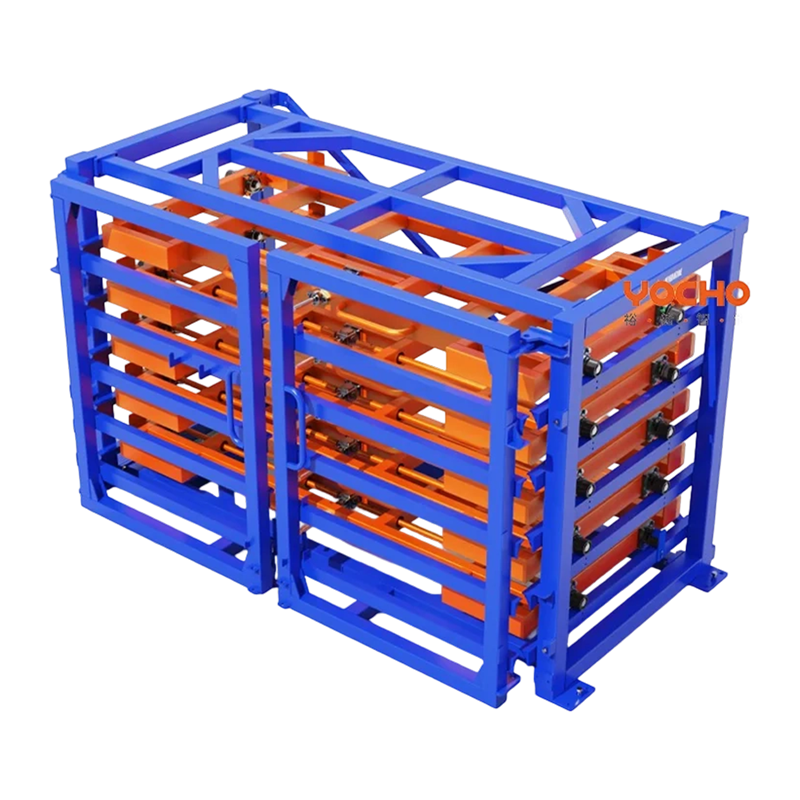
Storage is usually the first process worth automating, partly because it's self-contained and partly because the space savings show up immediately. A vertical automated system replaces rows of flat, ground-level storage with a dense, multi-level structure that a PLC-controlled lift retrieves from in seconds.
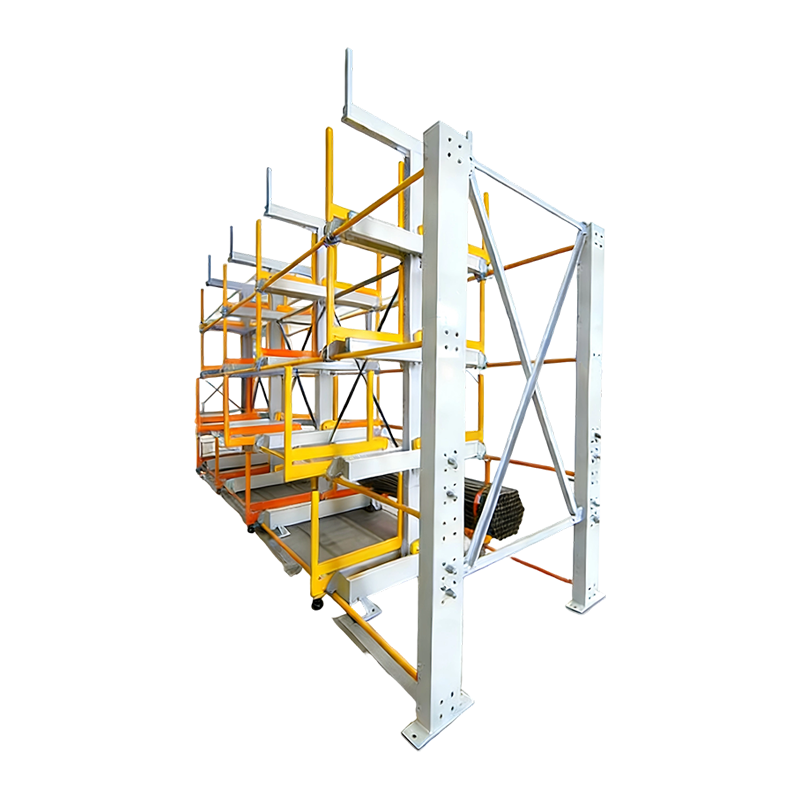
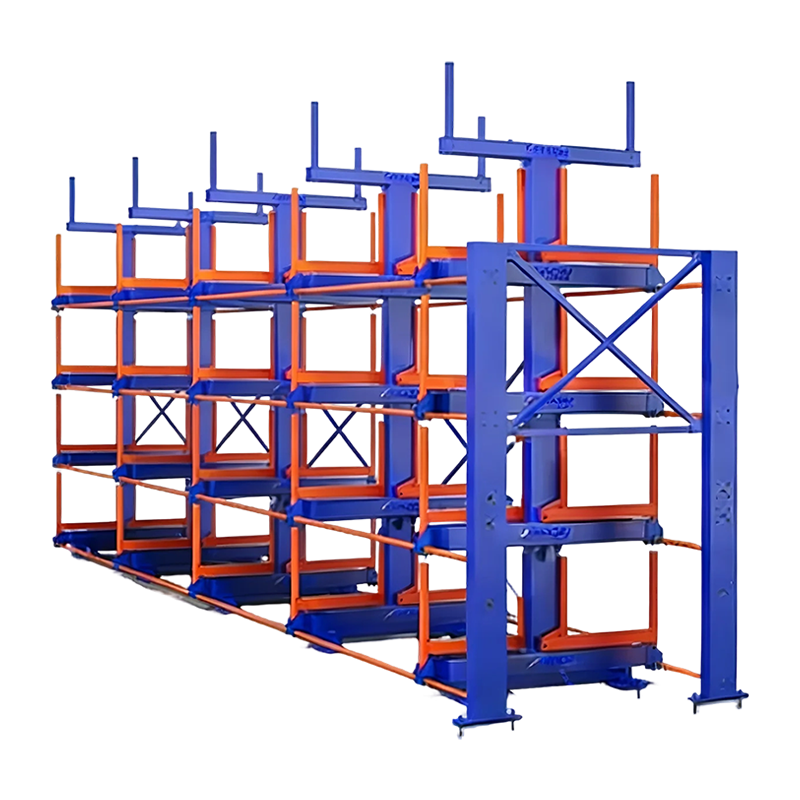
For sheet metal specifically, a PLC-controlled automated sheet metal storage system handles the weight detection, classification, and retrieval sequence automatically, which removes the guesswork that comes with manually tracking plate thickness and quantity across a stack. Facilities working with a broader mix of long materials, coils, or panels can look across the full range of automated storage systems to match the rack configuration to the specific material geometry involved.
The appeal of starting here is that storage automation doesn't require touching how materials move once they leave the rack — it's a contained upgrade that pays for itself in reclaimed floor space alone before efficiency gains are even factored in.
Loading and Unloading: Where Manual Labor Still Bottlenecks
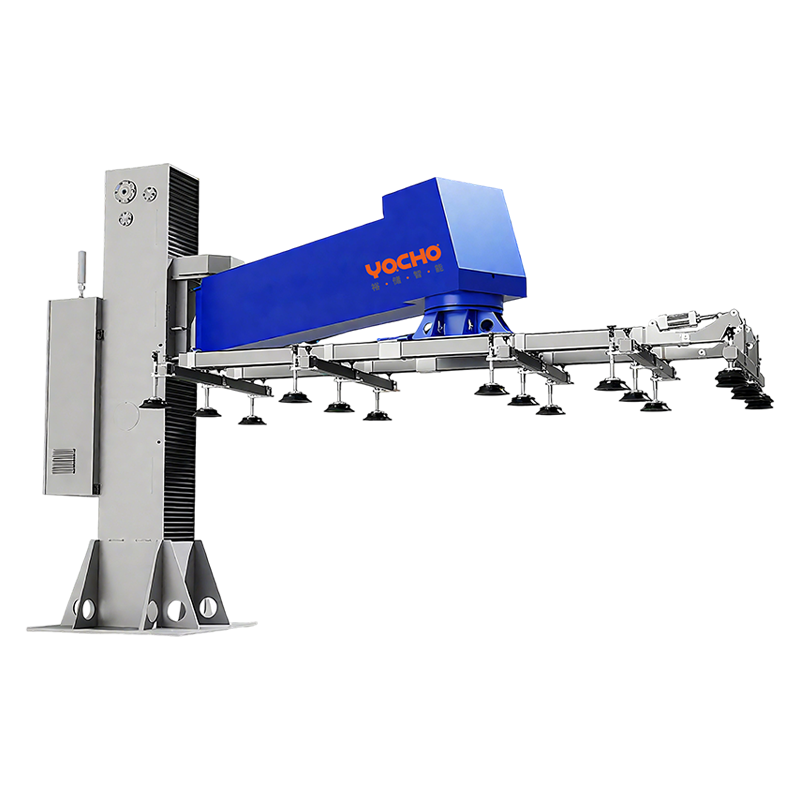
Once storage is automated, the next bottleneck usually surfaces at the point where material moves between the rack and the processing line. This is repetitive, physically demanding work — exactly the profile of task that benefits most from a dedicated manipulator.
A servo swing arm handling manipulator for precision loading and unloading can hold repeat positioning accuracy within a fraction of a millimeter, which matters when a sheet has to land in exactly the right spot on a cutting or welding line every single cycle. Beyond precision, these systems are built for continuous operation, running shifts that would otherwise require multiple operators rotating through fatigue-heavy tasks.
For facilities weighing which handling process to automate first, intelligent loading and unloading manipulators come in configurations suited to different plate sizes and weights, so the equipment can be matched to the specific line rather than forcing a one-size-fits-all installation.
What Semi-Automation Delivers in Practice
The efficiency gains are the most cited benefit, and they compound: automated retrieval cuts the time spent locating and pulling material, while automated handling keeps that material moving without waiting on an available operator. Together, these reduce the total cycle time from storage to processing station.
Safety improves for a less obvious reason than most people expect. It isn't just that machines replace risky manual lifting — it's that automated systems handle materials with the same motion every time, eliminating the inconsistent handling that causes both injuries and material damage from dropped or mishandled plates.
Inventory accuracy follows close behind. Automated storage systems log every retrieval and placement, which closes the gap between what a spreadsheet says is on the shelf and what's actually there — a gap that manual tracking almost never fully closes.
Planning the Transition: Where to Start
The clearest starting point is whichever process currently causes the most downtime or the most safety incidents — not necessarily the one that looks most impressive to automate. For many metal fabrication shops, that's storage retrieval; for others handling heavier or more awkward material, it's the loading and unloading step.
Before selecting equipment, it helps to map the full material flow end to end. A step-by-step guide to organizing warehouse flow efficiently walks through how receiving, storage, and shipping should line up before adding automated equipment on top, since automating a poorly laid out process just moves the bottleneck rather than removing it.
Semi-automation works best as a phased plan rather than a single purchase — get one process right, measure the results, and use that data to justify the next step.

If you are interested in our products, please consult us
PRODUCTS
NEWS CENTER
MOBILE TERMINAL

CONTACT US
- ADDRESS: Room 205, Office Building, Shandong Yurui Machinery Group Co., Ltd., at the intersection of Banqiao Road and Huangjin Road, Pingyi Street, Pingyi County, Linyi City, Shandong Province.
- PHONE: +86-19819101584
- EMAIL: [email protected]
Linyi Yocho Storage Intelligent Manufacturing Co.,Ltd. ALL RIGHTS RESERVED. ALL RESERVED. Warehouse Rack Manufacturers Warehouse Shelves Factory
