

 русский
 Español
 عربى
عربى
Cantilever Racking Inspection & Maintenance: A Practical Checklist
 2026.07.07
 Industry News
Content
Why Cantilever Racks Need a Dedicated Inspection Routine
A pallet rack fails gradually and visibly — a bent upright, a cracked weld, a sagging beam are all things you can spot from an aisle away. A cantilever rack fails differently. Because the load sits on an arm supported at only one end, damage concentrates at the arm-to-column connection, a point that's often blocked from view by the very material stored on it.
That single-point loading is exactly what makes cantilever systems so useful for pipes, bar stock, and sheet goods — no front columns means no obstruction. It's also why a generic warehouse walkthrough tends to miss early warning signs specific to this rack type. A cantilever-specific inspection routine catches problems where they actually start, not just where they become visible.
What to Check on Each Component
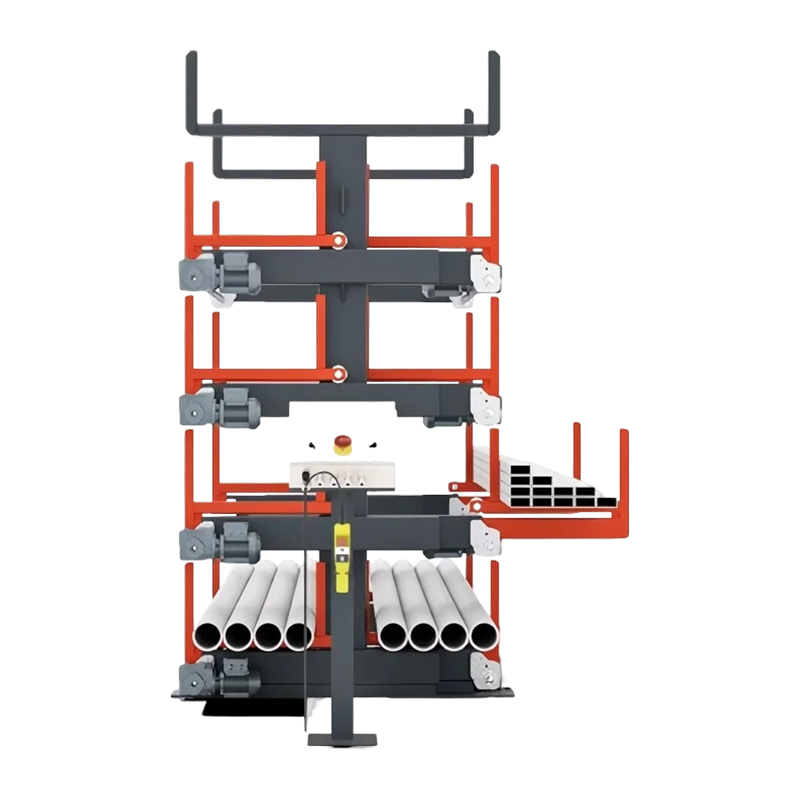
Every cantilever rack breaks down into the same four parts, and each one fails in a different way. Knowing what to look for at each point turns a vague "check the racks" instruction into something a floor supervisor can actually execute.
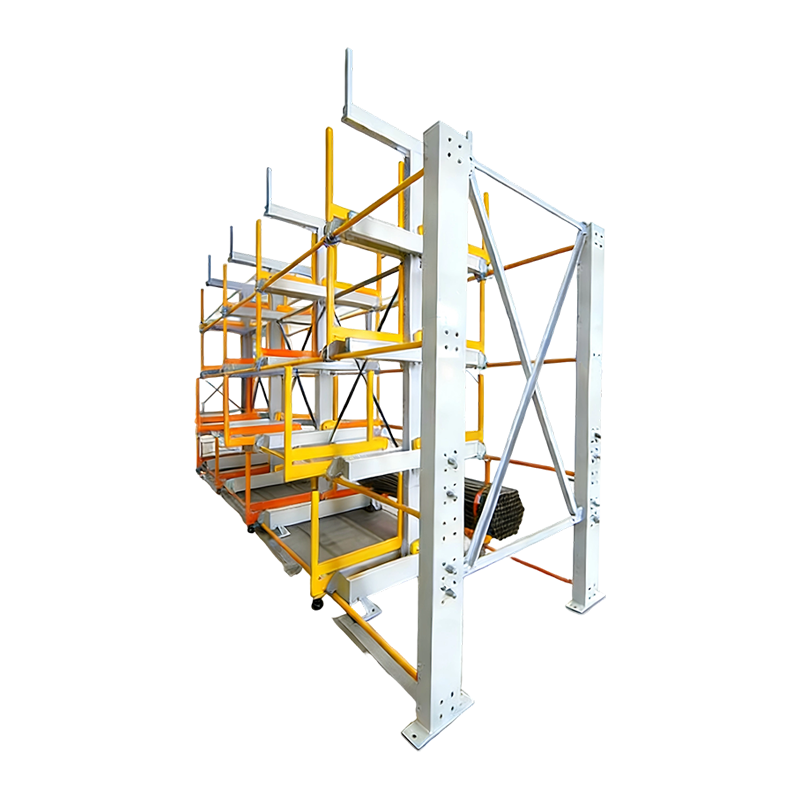
Column (upright): Sight down the length of the column from top to bottom. Any visible bow, twist, or lean toward the aisle is a structural red flag, not a cosmetic one — the structural components of a cantilever rack are engineered around the column staying straight under load, and even a slight permanent bend changes how force travels through the rest of the structure.
Base: Check that anchor bolts are still tight and that the base plate sits flush against the floor with no visible lift on either side. A base that's rocking or partially lifted means the column is no longer being held down the way it was designed to be, which is often the first sign of an overload condition upstream.
Arms: Look for downward droop compared to a level arm on the same column, and check the arm-to-column weld or bolt connection for cracking or elongated bolt holes. Inclined arms holding round stock should still sit at their original angle — a flattened incline means the arm has taken more repeated load than it was rated for.
Braces: Confirm bracing between columns is intact and bolts haven't backed out from vibration. Missing or loose bracing doesn't show up as an obvious failure on its own, but it removes the lateral stability the whole row depends on.
Recognizing Damage That Requires Immediate Action
Not every mark on a cantilever rack is a crisis, but a few signs should stop operations on that bay until an engineer or qualified inspector reviews it. Any visible column deflection — a lean of more than about 1 inch per 10 feet of height is a commonly used field guideline — should be treated as a load-bearing structure that's no longer performing as designed, not something to monitor and revisit next month.
The same applies to any cracked weld at an arm connection, a sheared or missing bolt, or forklift impact damage to a column base. OSHA's general materials handling standard requires that stored material not create a hazard, and a structurally compromised rack storing heavy pipe or sheet stock is precisely the kind of hazard that standard is written to prevent. Unload the affected bay before repairs begin — inspecting or repairing a loaded arm risks the exact collapse the inspection is meant to catch.
Inspection Frequency: Daily, Monthly, Annual
A three-tier schedule covers most facilities without turning inspection into a full-time job. Daily checks are visual and quick: forklift operators and warehouse staff glance for obvious impact damage, leaning columns, or shifted loads as part of normal operations, since they're already in the aisles multiple times a shift.
Monthly checks go a level deeper — a supervisor walks each row specifically looking for the component-level issues described above, checking bolt tightness on a sample of connections, and logging anything questionable rather than relying on memory. Annual inspections should be done by a qualified rack inspector or structural engineer, ideally the same person or firm each year so deflection and wear can be tracked against a consistent baseline rather than judged fresh each time.
When to Repair vs. Replace
Minor cosmetic damage — surface scratches, light surface rust on a galvanized outdoor rack, or a superficial dent that doesn't affect alignment — can usually be addressed with spot repair or simply monitored. The line moves to replacement once damage affects load path: a bent column, a cracked arm-to-column connection, or any deformation that changes how the arm sits relative to the column.
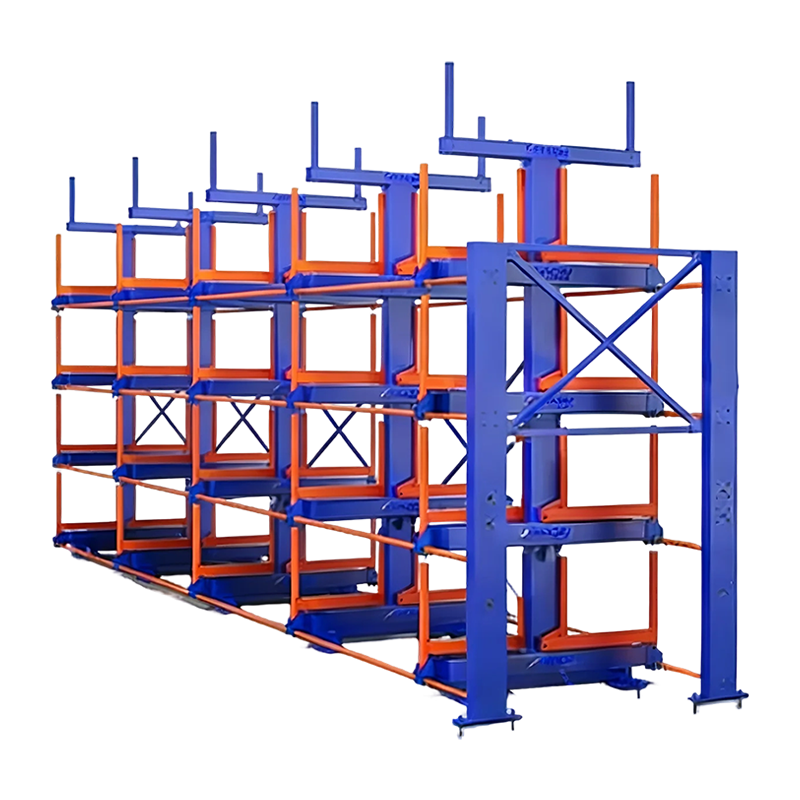
Structural components generally can't be field-straightened back to their original rated capacity — cold-worked steel that's been bent under load doesn't reliably return to its original strength even if it's bent back to the original shape. When in doubt, treat the arm or column as compromised and replace it; our long material storage rack selection guide covers how to match replacement components to your existing system's load ratings and column spacing. For facilities standardizing on a single supplier, sourcing heavy-duty cantilever steel storage racks built to documented load specifications makes future replacement parts far easier to match than working from field measurements alone.

If you are interested in our products, please consult us
PRODUCTS
NEWS CENTER
MOBILE TERMINAL

CONTACT US
- ADDRESS: Room 205, Office Building, Shandong Yurui Machinery Group Co., Ltd., at the intersection of Banqiao Road and Huangjin Road, Pingyi Street, Pingyi County, Linyi City, Shandong Province.
- PHONE: +86-19819101584
- EMAIL: [email protected]
Linyi Yocho Storage Intelligent Manufacturing Co.,Ltd. ALL RIGHTS RESERVED. ALL RESERVED. Warehouse Rack Manufacturers Warehouse Shelves Factory
