

 русский
 Español
 عربى
عربى
Drawer-Type Sheet Racks vs. Smart Material Warehouses: Which Storage Solution Fits Your Needs?
 2025.12.17
 Industry News
Amid the continuous upgrading of industrial warehousing management, pipe materials have always been a major challenge due to their long length, heavy weight, and vulnerability to damage. The traditional stacking storage method not only causes space waste but also leads to low operational efficiency, directly affecting the supply chain response speed of enterprises.
1.Three Core Pain Points of Traditional Storage Modes
Severe Material Loss — The traditional stacking method subjects the lower-layer pipes to enormous pressure, resulting in prominent problems such as deformation, indentation, and surface abrasion.
Low Space Utilization—Disorganized stacking leads to the waste of a large amount of vertical warehouse space. Actual measurements show that the space utilization rate of traditional stacking is less than 40%—the warehouse seems full, but the actual effective storage capacity is very limited.
Operational Efficiency Bottleneck — When picking specific pipes, it is necessary to move an average of 60% of other materials on the upper layers to access the target goods. This process is not only time-consuming and labor-intensive but also directly affects the downstream production rhythm.
2.Innovative Systematic Solutions
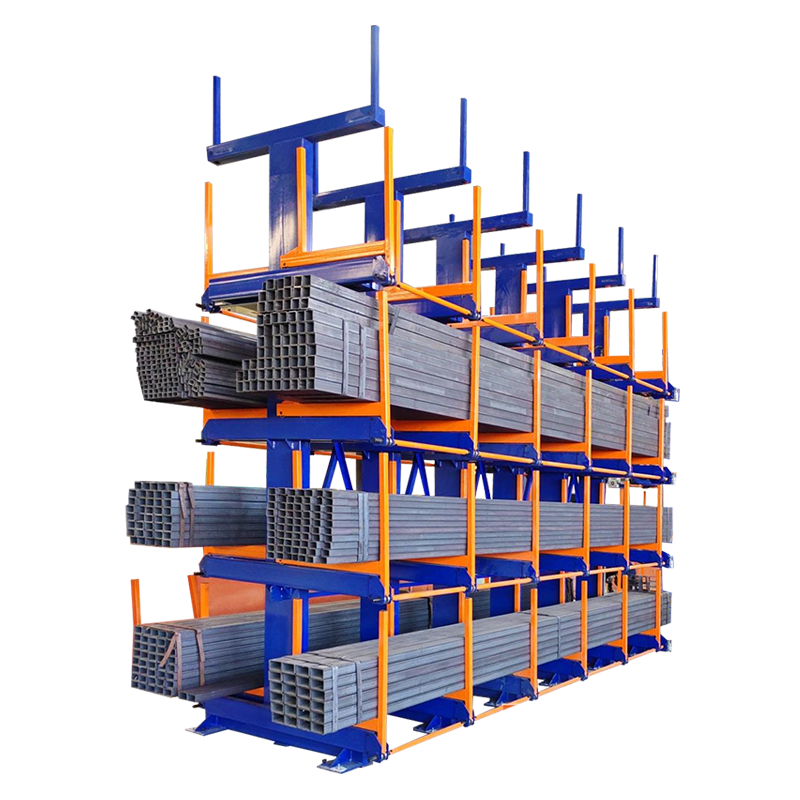
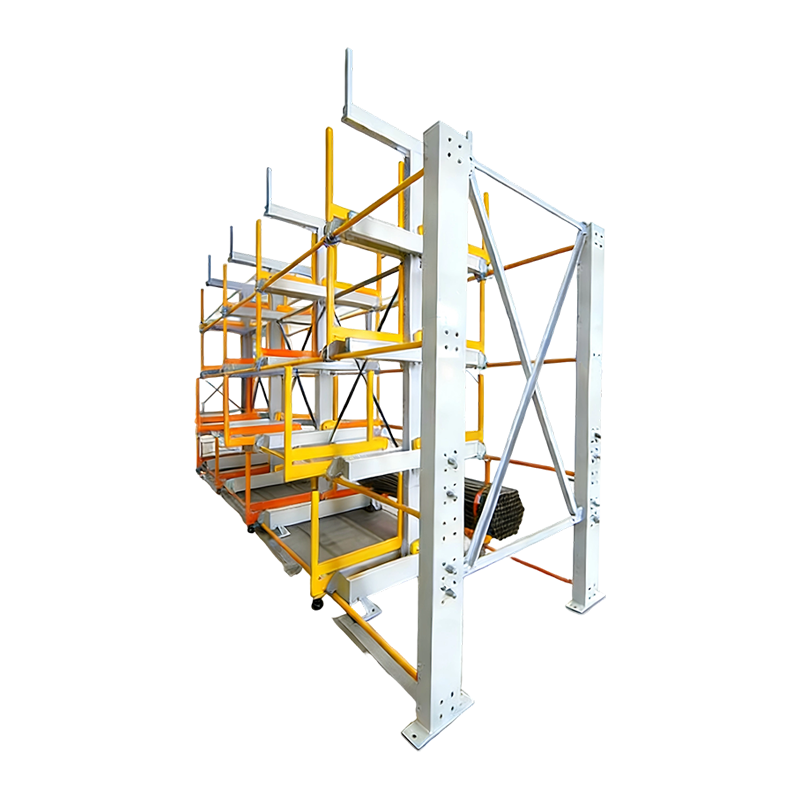
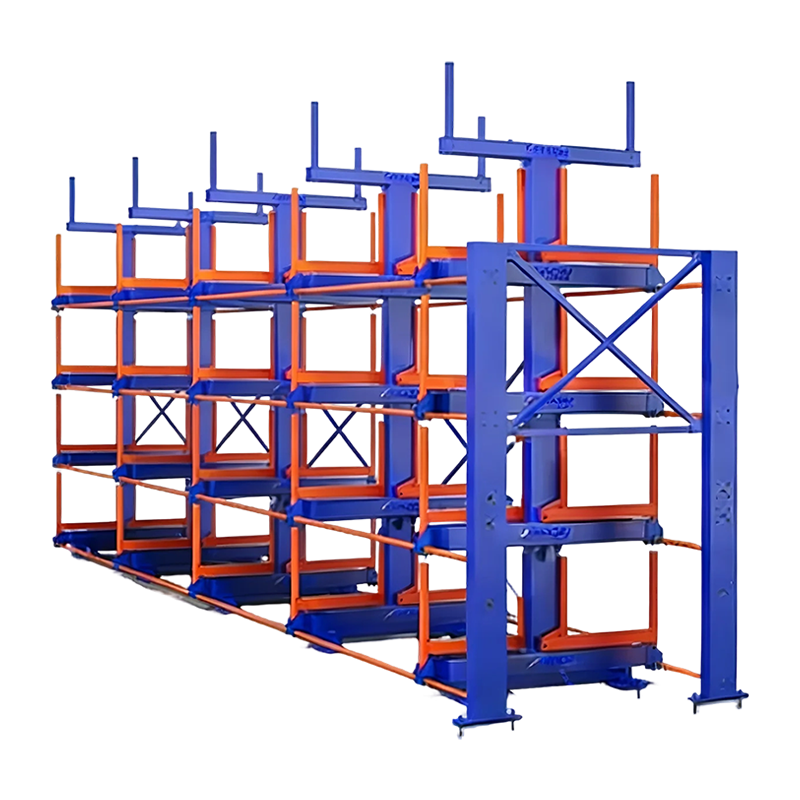
Adjustable Cantilever System—The cantilever length can be flexibly adjusted within the range of 0.3-1.3 meters, realizing "one rack for multiple uses" from short pipes to extra-long pipes. The unique three-level load-bearing design allows a single arm to bear up to 8 tons, meeting the storage needs of pipes of different specifications.
Double-Sided Storage Structure—The innovative aisle-type design enables double-sided access, increasing the storage capacity by more than 150% under the same floor space. Combined with special access equipment, it saves 40% of aisle space compared with traditional operation methods.
3.Proven Applications Across Multiple Industries
Pipe Industry—After introducing this rack system, a large steel market not only reduced the loss rate from 3% to below 0.5% but also doubled the storage capacity within the original site. By placing high-frequency outbound pipes in easily accessible locations, it realized intelligent inventory management of "fast-moving goods for quick access, slow-moving goods for deep storage."
Manufacturing Industry — A metal manufacturing enterprise used this rack system to store long-shaft parts. Combined with a barcode management system, it achieved full-process digital management from warehousing to outbound, increasing order processing efficiency by 200%.
With the in-depth advancement of intelligent manufacturing, telescopic cantilever racks are expected to become a standard configuration in the industrial warehousing field within the next 3-5 years. This innovative solution is not only an equipment upgrade but also an important innovation in warehousing management concepts. As application scenarios continue to expand and technology matures, telescopic cantilever racks are redefining the standards of industrial warehousing and driving the entire industry toward a more efficient and intelligent direction.

If you are interested in our products, please consult us
PRODUCTS
NEWS CENTER
MOBILE TERMINAL

CONTACT US
- ADDRESS: Room 205, Office Building, Shandong Yurui Machinery Group Co., Ltd., at the intersection of Banqiao Road and Huangjin Road, Pingyi Street, Pingyi County, Linyi City, Shandong Province.
- PHONE: +86-19819101584
- EMAIL: [email protected]
Linyi Yocho Storage Intelligent Manufacturing Co.,Ltd. ALL RIGHTS RESERVED. ALL RESERVED. Warehouse Rack Manufacturers Warehouse Shelves Factory
