

 русский
 Español
 عربى
عربى
Picking Automation in Industrial Warehousing: Technologies & Selection Guide
 2026.06.01
 Industry News
Picking accounts for roughly 55% of total warehouse operating costs — and in metal processing and industrial manufacturing environments, that figure often climbs higher. Sheet metal panels weigh hundreds of kilograms. Pipes and profiles span several meters. Standard picking approaches built for consumer goods distribution simply don't scale to these materials. The result is slow retrieval, damaged inventory, and a labor cost structure that grows proportionally with output volume.
Picking automation breaks that relationship. By integrating automated retrieval, intelligent storage systems, and software-driven inventory management, modern facilities are achieving retrieval time reductions of up to 70% while simultaneously improving material traceability and reducing floor-level accidents. This guide covers how picking automation works in industrial settings, the technologies that enable it, and the selection criteria that matter most in metal and manufacturing environments.
Content
- 1 What Picking Automation Actually Means in Industrial Warehousing
- 2 Core Technologies in Automated Picking Systems
- 3 How Automated Picking Improves Operational Performance
- 4 Picking Automation for Long Materials: Pipes, Profiles, and Bars
- 5 Integrating Automated Picking with Production Lines
- 6 Evaluating a Picking Automation Investment: Key Criteria
What Picking Automation Actually Means in Industrial Warehousing
In conventional warehousing, picking refers to the process of locating, retrieving, and delivering a specific item from storage to a processing station or dispatch area. In a manual warehouse, this involves a worker physically navigating storage aisles, identifying the correct item, and transporting it — often with a forklift or crane — to where it is needed. Each of those steps introduces time cost, error risk, and physical strain.
Picking automation replaces or supplements the manual elements of this process with mechanical and software systems. In the most complete implementations, a warehouse management system (WMS) receives a retrieval request, identifies the optimal storage slot, dispatches an automated retrieval mechanism — a stacker crane, gantry robot, or robotic arm — and delivers the item to a fixed loading or unloading station. The worker receives the material without having to search, navigate, or manually handle heavy loads.
The critical distinction for metal storage environments is that picking automation here operates on heavy, oversized, and often irregular materials — sheet panels up to 3,000 kg, pipes up to 12 meters long, bars and profiles of varying cross-sections. The automation system must be engineered specifically for these load characteristics, not adapted from systems designed for palletized consumer goods.
Core Technologies in Automated Picking Systems
Modern picking automation in industrial settings combines several technology layers. Each has a distinct role, and their integration determines overall system performance.
| Technology | Function | Typical Application in Metal Storage |
|---|---|---|
| Automated Storage & Retrieval System (AS/RS) | Stores and retrieves items automatically via stacker cranes or gantry robots | Sheet metal panels, pipe cassettes in vertical tower systems |
| Intelligent Loading/Unloading Manipulator | Robotic arms or gantry systems that transfer materials between storage and processing lines | Feeding laser cutters, press brakes, and CNC machines from storage |
| Warehouse Management System (WMS) | Software layer that tracks inventory, schedules picks, and interfaces with ERP systems | Real-time slot assignment, material traceability, order sequencing |
| PLC & Touch-Screen Control | Operational control interface for storage and retrieval commands | Operator-initiated retrieval with automatic weight detection and slot confirmation |
| Conveyor & AGV Integration | Horizontal transport of materials between storage and workstations | Roller conveyors for panel feeding; AGVs for inter-department transfer |
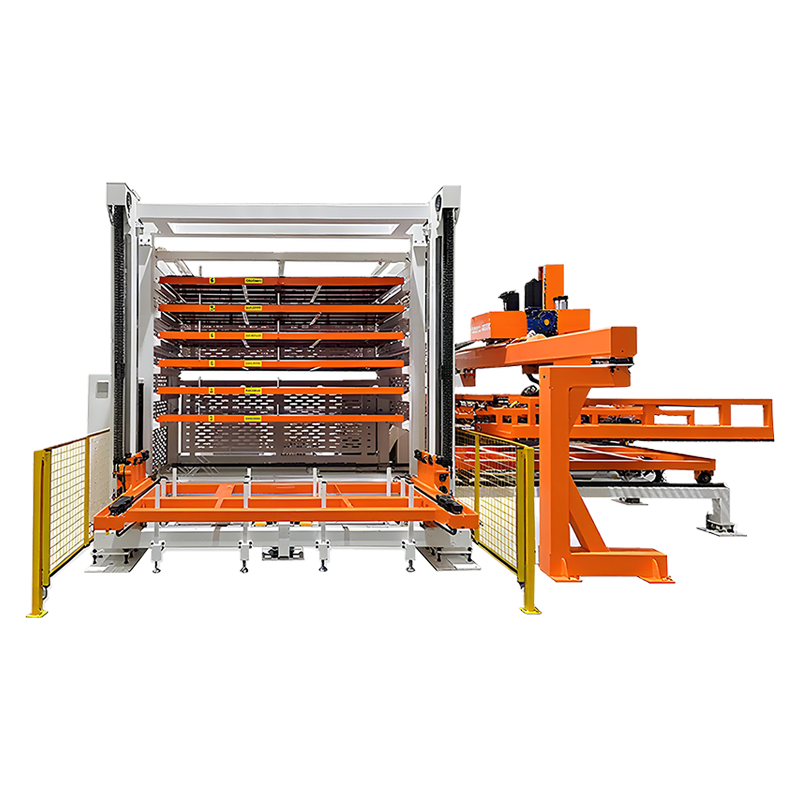
In practice, the most impactful single technology decision is the choice of storage system architecture, since it determines what retrieval mechanisms are possible. A automated sheet metal storage system with vertical multi-layer structure and PLC control enables single-item retrieval without disturbing adjacent inventory — a capability that manual or semi-automated racks cannot replicate.
How Automated Picking Improves Operational Performance
The performance case for picking automation in industrial metal storage is built on four measurable dimensions: speed, accuracy, space efficiency, and safety.
- Retrieval Speed: Automated retrieval systems reduce picking cycle times by 50–70% compared to manual operations. A stacker crane or gantry robot can locate and deliver a specific sheet or pipe cassette in seconds — a task that requires a forklift operator several minutes of navigation and positioning in a conventional rack system. For production lines where material delays translate directly into machine downtime, this speed difference has direct cost implications.
- Pick Accuracy: Automated storage systems with WMS integration achieve pick accuracy rates above 99%. Each storage slot is digitally assigned and confirmed at retrieval, eliminating the misidentification errors that are common in manual operations across facilities with high SKU counts or similar-looking material types. This is particularly relevant in metal processing, where a mix-up between material grades — mild steel versus stainless, standard versus high-strength — can cause quality failures downstream.
- Space Utilization: Vertical automated storage systems recover floor space that manual rack configurations cannot. AS/RS solutions have been shown to reduce the footprint required for equivalent storage capacity by up to 85% compared to floor-stacked or conventional cantilever arrangements. In facilities where real estate is constrained, this spatial efficiency directly enables production capacity expansion without building expansion.
- Workplace Safety: Removing workers from heavy manual handling tasks — and from the aisles where forklifts and crane movements occur — measurably reduces accident frequency. Intelligent loading and unloading manipulators equipped with precision sensors handle material transfer between storage and processing equipment without human intervention in the danger zone.
Picking Automation for Long Materials: Pipes, Profiles, and Bars
Long materials present a specific set of picking automation challenges. Their length — often 6 to 12 meters — makes standard AS/RS tower designs inapplicable. Their weight distribution is asymmetric. And their retrieval typically requires access from the end rather than the face of the storage unit.
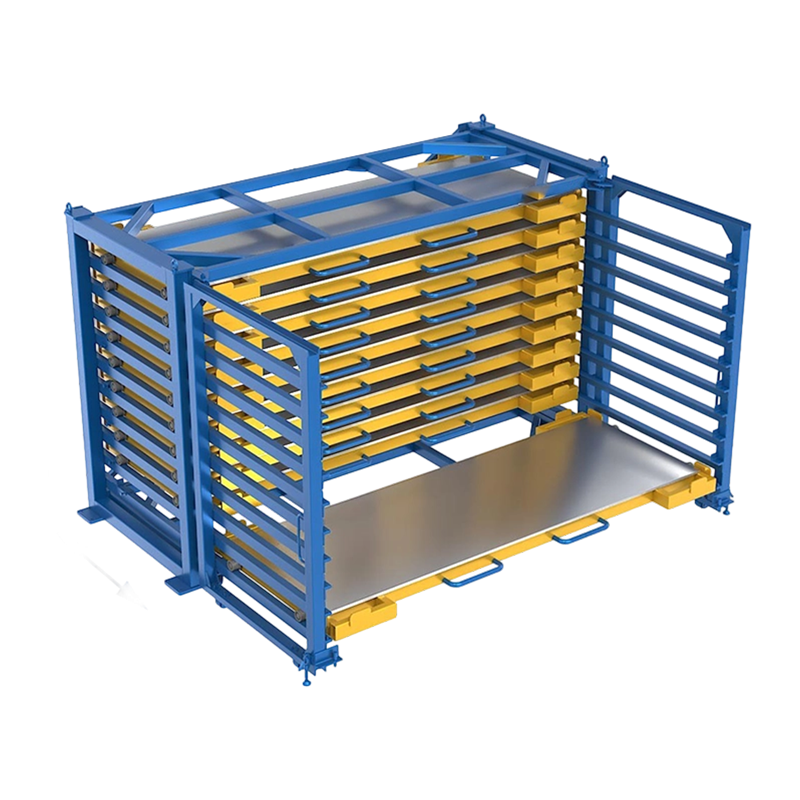
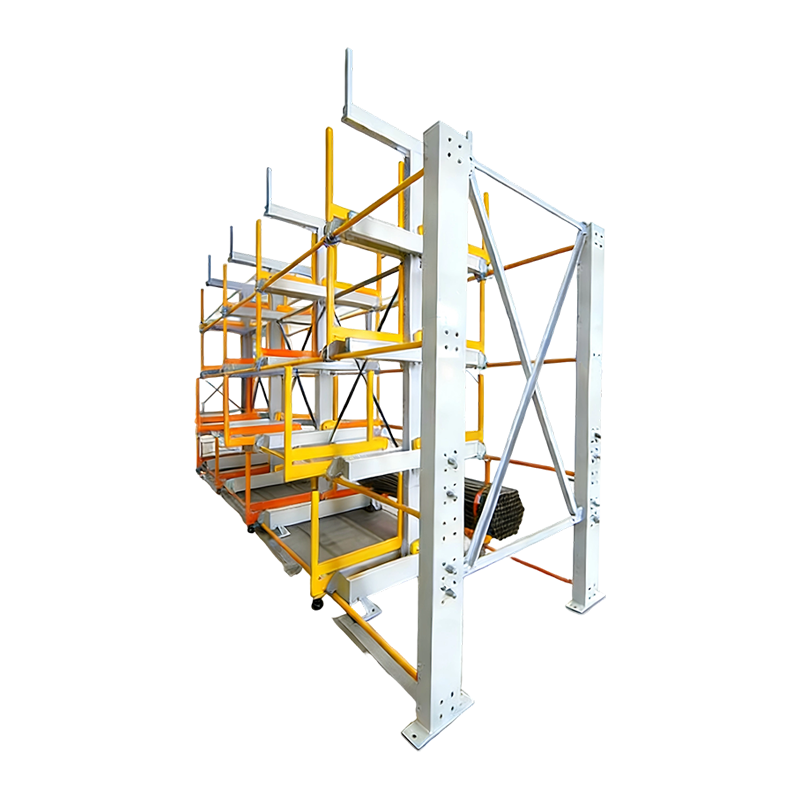
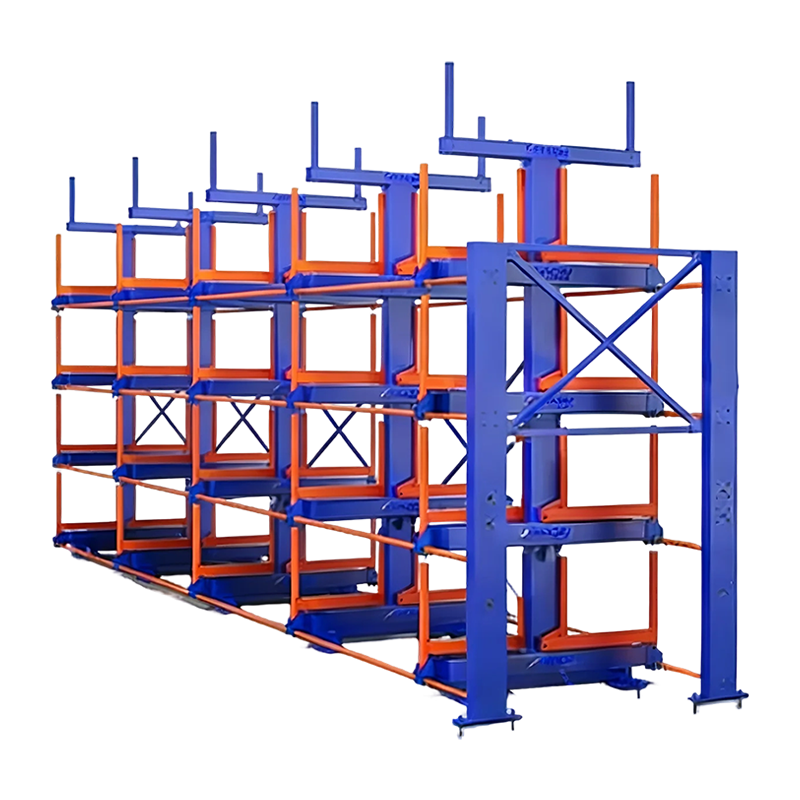
Purpose-built automated systems for long materials address these constraints through cantilevered or cassette-based architectures with motorized retrieval mechanisms. A long material storage rack with automated retrieval capability stores pipes, bars, and profiles in dedicated cassettes or cantilever bays, with a stacker crane or servo-driven arm that delivers the selected cassette to a fixed unloading position. This eliminates the need for a forklift operator to navigate into dense rack aisles to extract a specific pipe length — a common source of both delays and damage in conventional pipe storage.
WMS integration in these systems enables additional intelligence: tracking material grades, heat numbers, lengths, and surface conditions per cassette; generating automatic picking lists for cut-to-length operations; and providing production scheduling systems with real-time inventory data that prevents material shortages from halting production runs.
Integrating Automated Picking with Production Lines
The full value of picking automation is realized when the storage system is integrated directly with downstream processing equipment rather than operated as a standalone retrieval function. In metal processing environments, this means connecting the automated storage system to laser cutters, plasma tables, press brakes, and punching machines so that material feeding becomes a continuous, system-managed process rather than a series of manual interventions.
A fully integrated automated storage and retrieval system (AS/RS) can receive a production order from an ERP or MES system, identify the required material in the WMS, dispatch the retrieval mechanism, and deliver the sheet or pipe to the machine loading zone — all without operator involvement in the material flow. The operator's role shifts from physical handling to quality verification and exception management.
This integration model also enables just-in-time material delivery to production cells: rather than pre-staging large quantities of material at machine-side (which consumes floor space and creates handling risk), the automated system delivers material in the sequence and timing dictated by the production schedule. Facilities implementing this approach report significant reductions in work-in-progress inventory and machine idle time.
Evaluating a Picking Automation Investment: Key Criteria
Selecting the right automated picking system for an industrial metal storage environment involves matching system specifications to operational realities. Four factors drive the decision.
- Material Characteristics: Weight per unit, maximum dimensions (sheet size or pipe length), required storage capacity by material type, and retrieval frequency all determine which storage architecture and retrieval mechanism is appropriate. Systems rated for 3,000 kg per cassette with 6-meter-long profiles have fundamentally different engineering requirements than those serving a light sheet metal fabrication operation.
- Production Integration Requirements: If the system needs to feed a laser cutter or CNC machine directly, the unloading station position, conveyor interface, and retrieval cycle time must be engineered to match the machine's feed cadence. Standalone storage systems that deliver to a general staging area have different specifications than production-integrated systems.
- WMS and ERP Compatibility: Verify whether the system's software platform integrates with existing ERP, MES, or production planning systems. The value of inventory traceability and automated picking list generation depends entirely on real-time data exchange between systems. Ask for documentation of existing integration protocols and reference installations.
- Scalability and Modularity: Operational requirements change. A system designed to be expanded — by adding storage levels, increasing cassette capacity, or integrating additional automation modules — preserves the initial capital investment as the business grows. Proprietary architectures that cannot be extended create long-term constraints.
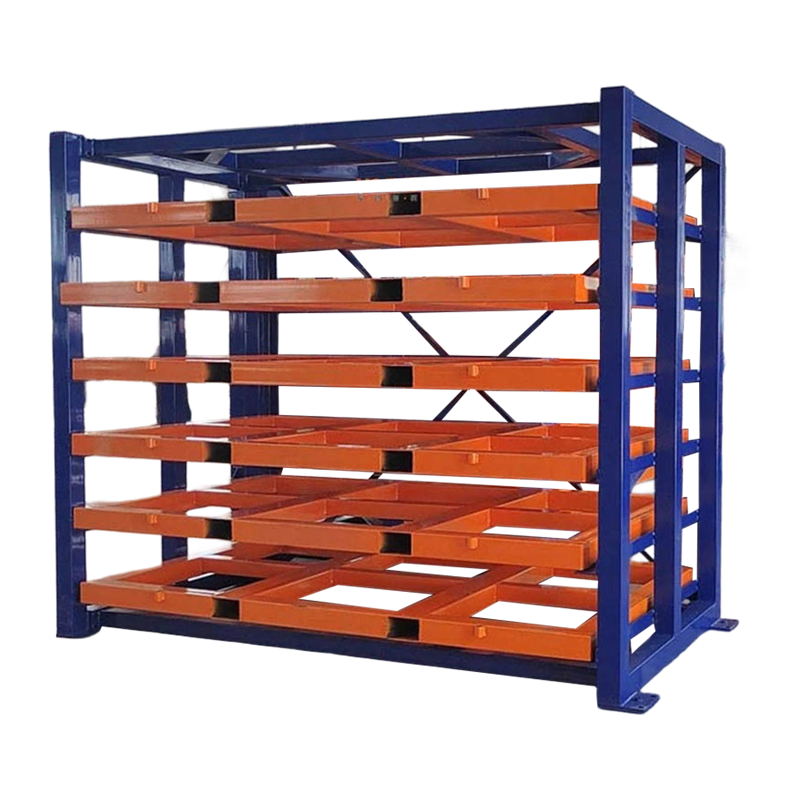
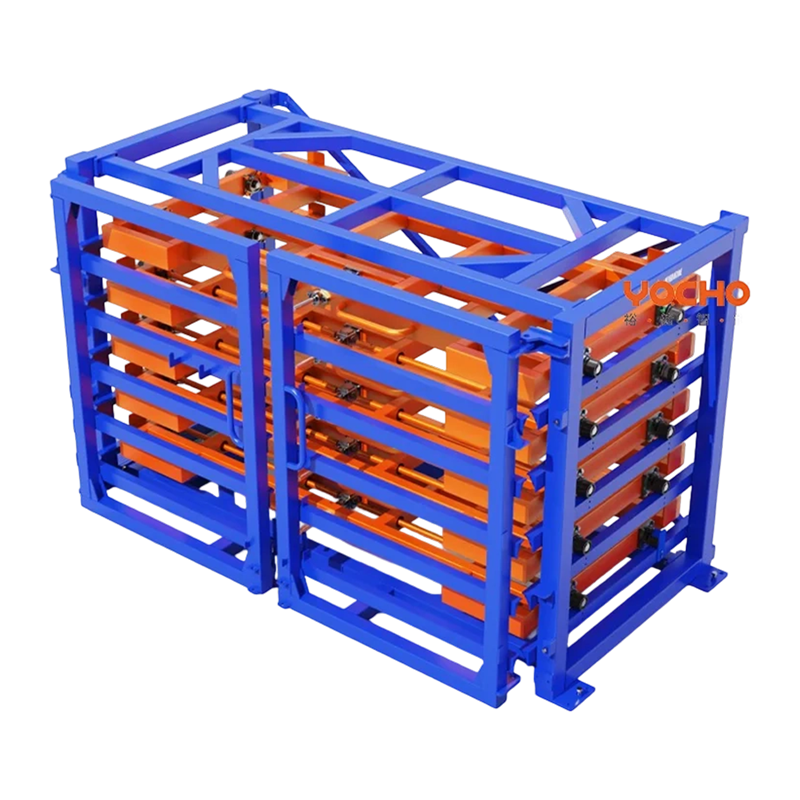
For a comprehensive view of available solutions across sheet metal, long material, and fully automated storage categories, explore the complete intelligent storage product range, with engineering consultation available to assess which configuration fits your facility's specific material flow and production requirements. The global warehouse automation market — currently valued at nearly $30 billion — reflects the scale at which industrial operations are already making this transition, with piece-picking robots forecast to grow at a 15.27% CAGR through 2031 as integration with production lines deepens across sectors.

If you are interested in our products, please consult us
PRODUCTS
NEWS CENTER
MOBILE TERMINAL

CONTACT US
- ADDRESS: Room 205, Office Building, Shandong Yurui Machinery Group Co., Ltd., at the intersection of Banqiao Road and Huangjin Road, Pingyi Street, Pingyi County, Linyi City, Shandong Province.
- PHONE: +86-19819101584
- EMAIL: [email protected]
Linyi Yocho Storage Intelligent Manufacturing Co.,Ltd. ALL RIGHTS RESERVED. ALL RESERVED. Warehouse Rack Manufacturers Warehouse Shelves Factory
