

 русский
 Español
 عربى
عربى
Mezzanine Shelving System: Types, Load Specs & OSHA Safety Guide
 2026.06.09
 Industry News
Content
- 1 Why Facilities Are Turning to Mezzanine Shelving Systems
- 2 Three Main Types of Industrial Mezzanine Systems
- 3 Load Capacity, Height, and Design Specifications
- 4 OSHA and IBC Safety Requirements for Mezzanine Floors
- 5 Integrating Mezzanine Shelving With Metal Material Storage
- 6 Mezzanine Shelving vs. Warehouse Expansion: A Cost Comparison
Why Facilities Are Turning to Mezzanine Shelving Systems
Floor space runs out faster than most facility managers expect. Production lines expand, inventory grows, and before long, the warehouse that seemed adequate three years ago is operating at 90% capacity with no clear path to expansion. Leasing additional space or funding a full construction project can cost hundreds of thousands of dollars and take months to execute.
A mezzanine shelving system offers a different answer: build upward, not outward. By installing an elevated platform structure between the floor and the ceiling, facilities can double or even triple their usable storage area within the existing building footprint. The approach requires no major renovation, no relocation, and — critically — no interruption to ongoing operations during a phased installation.
The economics are straightforward. A well-specified mezzanine system typically costs a fraction of what new construction demands, can be installed in as little as three to five days for smaller configurations, and is classified as a semi-permanent structure in most jurisdictions, meaning it can be dismantled and relocated if business needs change. For manufacturers, fabricators, and distributors managing heavy or awkward materials, this flexibility is not a minor benefit — it is a core operational advantage.
Three Main Types of Industrial Mezzanine Systems
Not all mezzanine systems are built the same way, and selecting the wrong configuration for a specific environment leads to either wasted capacity or structural risk. The three main types each solve a different set of constraints.
Freestanding (column-supported) mezzanines use independent structural steel columns anchored to the floor. This design spans open areas without relying on any existing storage equipment for structural support, making it the most flexible option for facilities that need to reconfigure their ground-level layout over time. It is also the preferred choice when heavy equipment, vehicles, or pallet trucks need to pass underneath without obstruction.
Shelving-supported mezzanines integrate with existing or new shelving units, which serve as the structural base for the elevated platform above. The shelving underneath remains fully functional, so the ground-level storage area is not sacrificed. This type is particularly economical for facilities that are already running high-density shelving for small parts, hardware, or packaged goods.
Rack-supported (composite) mezzanines combine pallet racking on the lower level with a walkable platform on top, creating a dual-use structure where fork access continues at ground level while manual picking or light storage occurs above. It is the right call when the existing rack system already defines the warehouse layout and any reconfiguration would be disruptive.
| Type | Structural Support | Best For | Reconfiguration Ease |
|---|---|---|---|
| Freestanding (Column-Supported) | Independent steel columns | Open floor areas, vehicle access underneath | High |
| Shelving-Supported | Existing or new shelving units | Small parts, packaged goods, dense picking operations | Medium |
| Rack-Supported (Composite) | Pallet racking system | Dual-level operations, mixed fork and manual access | Low |
Load Capacity, Height, and Design Specifications
Structural performance is where mezzanine projects succeed or fail. Specifying a system without accurate load calculations is not just a compliance risk — it is a safety hazard that can result in catastrophic structural failure under dynamic loading conditions.
Industrial mezzanine shelving systems are typically engineered to support distributed loads ranging from 300 to 1,000 kg/m², depending on the application. Light-duty configurations suited to manual picking and archival storage fall toward the lower end. Systems designed for heavy metal components, tooling, or equipment storage must be specified toward the upper range, with the structural engineer confirming that column footings and floor anchors can transfer those loads safely into the existing slab.
Clear height beneath the mezzanine is another specification that gets underestimated. OSHA and most building codes require a minimum of 7 feet of clearance for occupied work areas below the platform. The height of the mezzanine level itself should allow for comfortable standing — typically 8 to 10 feet of clear space above the deck when the facility's ceiling height permits.
| Parameter | Light-Duty | Medium-Duty | Heavy-Duty |
|---|---|---|---|
| Distributed Load Capacity | 300–500 kg/m² | 500–750 kg/m² | 750–1,000 kg/m² |
| Typical Application | Archival storage, small parts | Packaged goods, tooling | Metal components, equipment |
| Column Spacing (typical) | Up to 6 m | 4–6 m | 3–4 m |
| Deck Material | Open steel grating or plywood | Steel checker plate | Heavy steel plate or reinforced deck |
Column spacing directly affects both cost and floor flexibility below. Wider spans reduce the number of columns interrupting the ground level but demand heavier primary beams and higher per-unit material costs. The structural design should be driven by the actual operational layout rather than defaulting to a standard module.
OSHA and IBC Safety Requirements for Mezzanine Floors
A mezzanine that passes a load test but fails a safety inspection exposes a facility to fines, enforced shutdowns, and — most critically — preventable injuries. Two regulatory frameworks govern mezzanine safety in the United States: OSHA standards and the International Building Code (IBC).
Under OSHA's walking-working surfaces standard 29 CFR 1910.28, employers are required to provide fall protection for any employee working at a height of 4 feet or more above a lower level. For mezzanine installations, this translates directly into specific guardrail requirements: the top rail must sit 42 inches (±3 inches) above the walking surface, and the system must be capable of withstanding 200 pounds of force applied in any outward or downward direction. A mid-rail must be installed at the midpoint between the top rail and the deck surface.
Stairway access is a separate but equally enforced requirement. OSHA mandates slip-resistant stair treads, handrails on both sides for stairways with open sides, and adequate width for the expected traffic volume. Ships ladders are permitted only for infrequent equipment access — they cannot serve as the primary means of egress for an occupied mezzanine level under IBC guidelines.
The IBC adds a layer of requirements tied to occupant load. Mezzanines serving fewer than 49 occupants require one means of egress; larger configurations require two or more exit stairways. Additionally, any mezzanine that occupies more than one-third of the floor area below is treated by the IBC as a full floor level, triggering stricter fire safety, sprinkler, and egress requirements. Facilities planning large mezzanine installations should confirm this threshold early in the design process to avoid costly code-driven redesigns.
Load rating signage is a non-negotiable final step. The maximum intended load must be clearly posted on the mezzanine structure itself. Exceeding rated capacity — even temporarily during a loading or offloading cycle — is one of the primary causes of structural incidents on elevated platforms.
Integrating Mezzanine Shelving With Metal Material Storage
For metal processing and fabrication facilities, mezzanine shelving systems are rarely deployed in isolation. Their value multiplies when they are designed as part of a coordinated material flow strategy — one that accounts for how flat sheets, long bar stock, and fabricated components move through the facility at different stages of production.
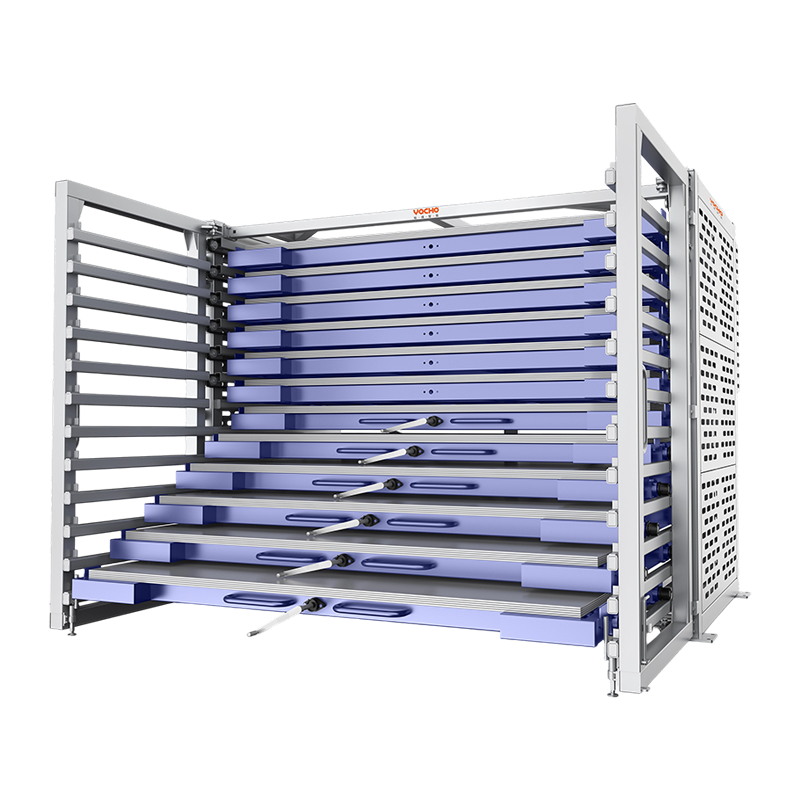
Flat sheet materials present a specific integration challenge. Steel plates, aluminum sheets, and stainless panels are heavy, planar, and prone to surface damage when stored incorrectly. The mezzanine level is well-suited to housing sheet metal storage racks designed for high-density drawer retrieval, where the elevated position keeps sheet inventory organized and accessible without consuming valuable ground-floor production space. The key specification here is deck load capacity — a drawer-loaded sheet rack on a mezzanine platform can concentrate significant point loads, and the deck must be designed to match the rack's rated capacity, not just the distributed floor load.
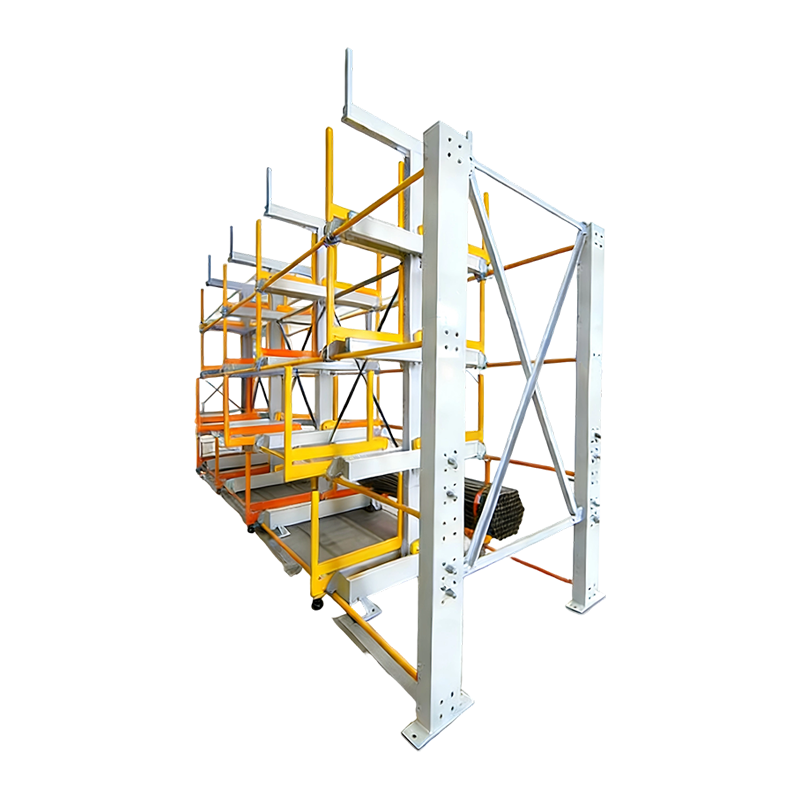
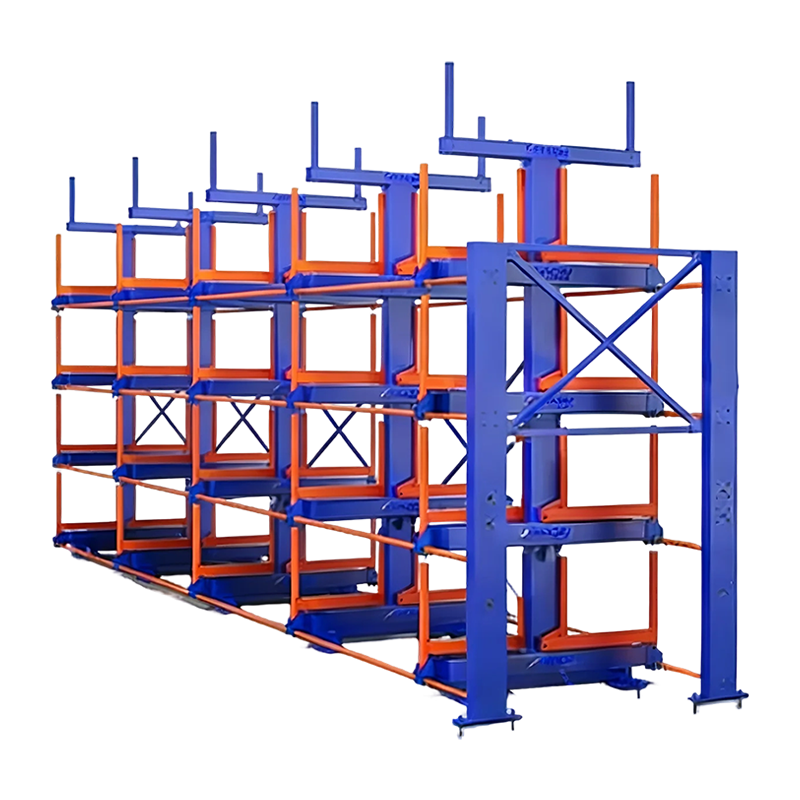
Long materials — pipes, structural profiles, angle iron, and rod stock — have different requirements. Their length makes vertical stacking impractical and floor-level cantilever racking the default choice. But the mezzanine level plays a supporting role: overhead catwalks and platform extensions can allow operators to access and manage cantilever-based long material storage racks for pipes and profiles at height, reducing reliance on forklifts for every retrieval cycle and improving pick accuracy.
At a higher level of integration, facilities looking to eliminate manual inventory management entirely can pair a mezzanine structure with automated storage systems that integrate with mezzanine-level workflows. In this configuration, the mezzanine serves as the mechanical platform for retrieval equipment — stacker cranes, loading manipulators, or conveyor infeed systems — while the shelving below operates as a high-density automated buffer. This architecture is increasingly common in high-throughput metal service centers and laser cutting facilities where machine uptime is directly tied to material availability.
Mezzanine Shelving vs. Warehouse Expansion: A Cost Comparison
The financial case for a mezzanine shelving system over building expansion is compelling in most scenarios, but it is worth being precise about where the advantages concentrate — and where they do not.
Construction costs for a new warehouse addition in North America typically run from $50 to $150 per square foot of added space, depending on location, structural requirements, and finishing specifications. A mezzanine system, by contrast, averages $15 to $40 per square foot of platform area, with the lower end applying to basic freestanding platforms and the upper range reflecting heavy-duty systems with integrated racking, fire suppression, and HVAC provisions for the upper level. The cost advantage is typically two to five times in favor of the mezzanine.
Installation timeline is a related advantage that rarely gets quantified in ROI calculations. A warehouse expansion project runs a minimum of three to six months from permit approval to occupancy. A standard mezzanine installation — including structural assembly, deck installation, guardrails, and stair access — is commonly completed in three to seven working days. The cost of operational disruption during that window is minimal by comparison.
| Criteria | Mezzanine Shelving System | Warehouse Expansion / New Build |
|---|---|---|
| Typical Cost per sq ft | $15–$40 | $50–$150+ |
| Installation Timeline | 3–7 working days | 3–6+ months |
| Permit Requirements | Varies by jurisdiction (often minor) | Full building permits required |
| Relocation Flexibility | Can be dismantled and reused | Permanent structure |
| Operational Disruption | Low (phased installation possible) | High (ongoing construction impact) |
| Space Multiplier | 2× to 3× within existing footprint | Direct addition of floor area |
The one area where expansion outperforms a mezzanine is ceiling-constrained buildings. A facility with 14-foot clear height has limited headroom for a functional two-level mezzanine system once OSHA clearance requirements are factored in. In those cases, the structural and safety constraints reduce the practical platform height and may limit the types of equipment or storage systems that can operate on the upper level.
For most industrial facilities with ceiling heights of 18 feet or above, a well-engineered mezzanine shelving system is the faster, more cost-effective, and more operationally flexible path to expanded capacity. Explore the full range of industrial metal storage solutions to see how mezzanine integration fits within a broader warehousing strategy.

If you are interested in our products, please consult us
PRODUCTS
NEWS CENTER
MOBILE TERMINAL

CONTACT US
- ADDRESS: Room 205, Office Building, Shandong Yurui Machinery Group Co., Ltd., at the intersection of Banqiao Road and Huangjin Road, Pingyi Street, Pingyi County, Linyi City, Shandong Province.
- PHONE: +86-19819101584
- EMAIL: [email protected]
Linyi Yocho Storage Intelligent Manufacturing Co.,Ltd. ALL RIGHTS RESERVED. ALL RESERVED. Warehouse Rack Manufacturers Warehouse Shelves Factory
