

 русский
 Español
 عربى
عربى
How do Intelligent Loading and Unloading Manipulators improve productivity?
 2025.10.31
 Industry News
Content
- 1 Introduction to Intelligent Loading and Unloading Manipulators
- 2 Automation and Reduced Manual Labor
- 3 Precision and Consistency
- 4 Speed and Cycle Time Optimization
- 5 Integration with Production Systems
- 6 Safety and Reduced Workplace Risk
- 7 Comparison Table: Manual vs. Intelligent Manipulators
- 8 Conclusion
Introduction to Intelligent Loading and Unloading Manipulators
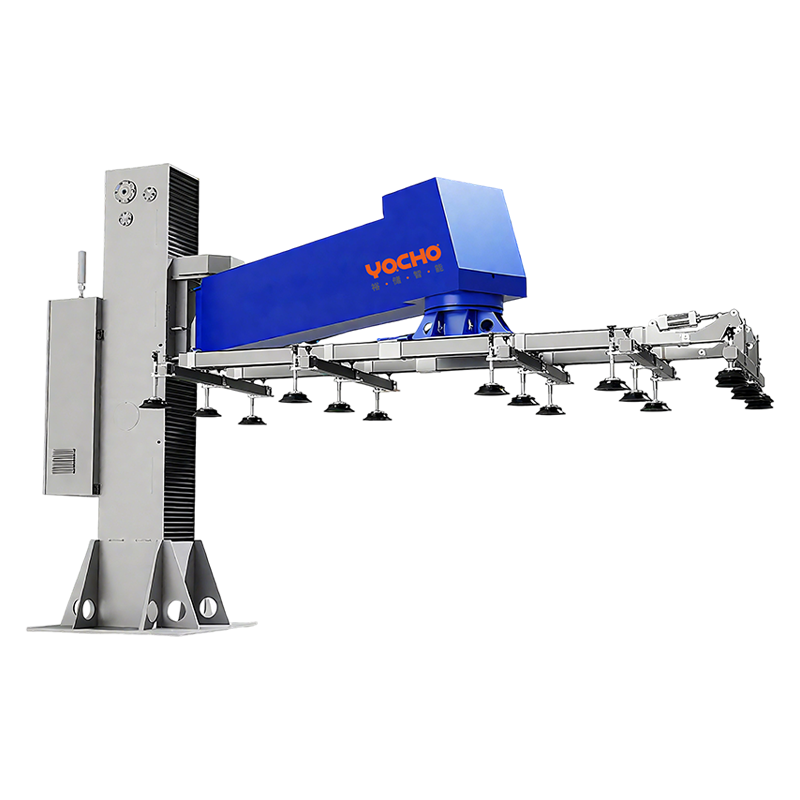
Intelligent loading and unloading manipulators are advanced robotic systems designed to automate material handling tasks in manufacturing and logistics. By combining precise motion control, sensors, and artificial intelligence, these manipulators can perform repetitive tasks efficiently, reducing the need for manual labor. This article explores how these systems enhance productivity, improve operational efficiency, and provide measurable business benefits.
Automation and Reduced Manual Labor
One of the most direct ways intelligent manipulators improve productivity is by automating labor-intensive processes. Tasks such as picking, placing, and transferring materials, which would normally require multiple operators, can be completed faster and with consistent accuracy.
Minimizing Human Error
Manual handling is prone to mistakes such as misalignment, damage to components, or incorrect placement. Intelligent manipulators use precise sensors and control algorithms to ensure each operation is accurate, reducing errors and material waste.
24/7 Operational Capability
Unlike human operators, manipulators can operate continuously without fatigue. This allows production lines to run 24/7, significantly increasing throughput and ensuring consistent output in high-demand environments.
Precision and Consistency
Precision is crucial in modern manufacturing, especially when handling delicate components or performing complex assembly tasks. Intelligent manipulators provide high repeatability, ensuring each movement is executed exactly as programmed.
Accurate Positioning and Alignment
Advanced manipulators are equipped with vision systems and sensors that allow them to detect exact positions of objects. This ensures proper alignment during loading or unloading, reducing the risk of product damage and improving overall production quality.
Maintaining Uniform Output
Consistent operation minimizes variability between units, which is essential for industries requiring strict quality standards. This uniformity also reduces downstream rework, saving time and resources.
Speed and Cycle Time Optimization
Intelligent manipulators are designed to operate at optimized speeds, balancing rapid movement with precise handling. Faster cycle times directly contribute to higher productivity and more efficient utilization of production resources.
Adaptive Motion Control
Robots equipped with adaptive motion control can adjust their speed and trajectory based on the weight, shape, and orientation of objects. This minimizes idle time and ensures smoother operation, enhancing overall efficiency.
Parallel Operations
Some intelligent manipulators can perform simultaneous tasks, such as picking one item while positioning another. Parallel operations reduce cycle time and increase throughput without additional human intervention.
Integration with Production Systems
Intelligent manipulators can be integrated with other automated systems, including conveyor belts, CNC machines, and packaging lines. Seamless integration ensures smooth workflow, reduces bottlenecks, and enhances overall production efficiency.
Real-Time Monitoring and Feedback
Connected manipulators provide real-time data on operation status, error detection, and performance metrics. This information allows managers to make informed decisions, optimize production schedules, and reduce downtime.
Flexibility in Production
Intelligent manipulators can be quickly reprogrammed for different product types or line configurations. This flexibility supports just-in-time production and reduces downtime associated with changeovers, improving overall productivity.
Safety and Reduced Workplace Risk
Automating loading and unloading tasks reduces the risk of workplace injuries caused by heavy lifting, repetitive motions, or hazardous materials. Safer working environments decrease downtime due to accidents and increase overall workforce efficiency.
Ergonomic Benefits
By handling physically demanding tasks, intelligent manipulators reduce operator fatigue and injury. This allows human workers to focus on higher-value tasks, enhancing productivity at multiple levels of the production process.
Reduced Error-Related Delays
Automated handling reduces mistakes that could cause production halts or require rework. Fewer interruptions and consistent performance contribute directly to higher throughput and predictable output schedules.
Comparison Table: Manual vs. Intelligent Manipulators
| Feature | Manual Loading/Unloading | Intelligent Manipulators |
| Speed | Limited by human capability | High-speed, optimized cycles |
| Consistency | Variable, prone to error | High repeatability and accuracy |
| Labor Requirements | Multiple operators needed | Minimal operator intervention |
| Flexibility | Limited to human skill | Quick reprogramming for different tasks |
| Safety | Risk of injury from manual handling | Reduced workplace hazards |
Conclusion
Intelligent loading and unloading manipulators significantly enhance productivity by automating repetitive tasks, ensuring precision and consistency, optimizing cycle times, integrating seamlessly with production systems, and improving workplace safety. By leveraging these advanced technologies, manufacturers can achieve higher throughput, reduce labor costs, and maintain a competitive edge in an increasingly automated industrial environment.

If you are interested in our products, please consult us
PRODUCTS
NEWS CENTER
MOBILE TERMINAL

CONTACT US
- ADDRESS: Room 205, Office Building, Shandong Yurui Machinery Group Co., Ltd., at the intersection of Banqiao Road and Huangjin Road, Pingyi Street, Pingyi County, Linyi City, Shandong Province.
- PHONE: +86-19819101584
- EMAIL: [email protected]
Linyi Yocho Storage Intelligent Manufacturing Co.,Ltd. ALL RIGHTS RESERVED. ALL RESERVED. Warehouse Rack Manufacturers Warehouse Shelves Factory
