

 русский
 Español
 عربى
عربى
Intelligent Loading Unloading Manipulators guide
 2026.02.05
 Industry News
Content
- 1 What are Intelligent Loading Unloading Manipulators
- 2 Core Components and Technologies
- 3 Types of Intelligent Loading Unloading Manipulators
- 4 Key Benefits and Advantages
- 5 Applications Across Industries
- 6 Selection Criteria and Considerations
- 7 Integration and Implementation
- 8 Return on Investment Considerations
- 9 Future Trends and Developments
What are Intelligent Loading Unloading Manipulators
Intelligent loading unloading manipulators are automated robotic systems designed to handle materials, parts, and products in manufacturing and warehousing environments. These sophisticated machines combine mechanical arms with advanced sensors, vision systems, and artificial intelligence to perform repetitive loading and unloading tasks with precision, speed, and minimal human intervention.
Unlike traditional fixed automation, intelligent manipulators can adapt to different workpiece sizes, shapes, and positions through real-time sensing and decision-making capabilities. They integrate seamlessly with CNC machines, injection molding equipment, stamping presses, and assembly lines to automate material handling workflows. Modern systems feature learning algorithms that optimize handling sequences, reduce cycle times, and improve overall production efficiency while maintaining consistent quality standards.
Core Components and Technologies
Mechanical Structure
The mechanical framework consists of articulated arms with multiple degrees of freedom, typically ranging from 3-axis to 6-axis configurations. The arm structure uses high-strength aluminum alloys or steel construction to support payload capacities from a few kilograms to several hundred kilograms. Precision bearings, linear guides, and harmonic drives ensure smooth motion with minimal backlash and excellent repeatability.
End effectors vary based on application requirements and include vacuum grippers, mechanical grippers, magnetic grippers, and specialized tooling for specific parts. Quick-change systems allow rapid switching between different end effectors to accommodate various workpieces within a single production shift. The mechanical design prioritizes rigidity to maintain positioning accuracy under load while minimizing weight to reduce energy consumption and enable faster movements.
Sensing and Vision Systems
Machine vision systems use high-resolution cameras with advanced image processing algorithms to identify part locations, orientations, and quality characteristics. 2D vision systems work well for flat parts or consistent orientations, while 3D vision using structured light or laser triangulation handles complex geometries and randomly oriented parts. Vision-guided picking enables manipulators to work with unstructured workpiece presentations rather than requiring precise fixture positioning.
Force and torque sensors provide tactile feedback during gripping and placement operations, preventing damage to delicate parts and ensuring proper seating in fixtures or machines. Proximity sensors detect obstacles and workpiece presence, enhancing safety and preventing collisions. The integration of multiple sensor types creates comprehensive environmental awareness that enables intelligent decision-making during handling operations.
Control Systems and Intelligence
The control architecture combines programmable logic controllers (PLCs) or industrial PCs with specialized motion controllers that coordinate multi-axis movements. Advanced systems incorporate artificial intelligence and machine learning algorithms that optimize motion paths, predict maintenance needs, and adapt to process variations. Real-time operating systems ensure deterministic response times critical for synchronized operations with production equipment.
Connectivity features enable integration with manufacturing execution systems (MES), enterprise resource planning (ERP) platforms, and other factory automation systems. Industrial communication protocols like EtherCAT, PROFINET, or OPC UA facilitate seamless data exchange and coordination with surrounding equipment. Cloud connectivity supports remote monitoring, diagnostics, and performance analytics that drive continuous improvement initiatives.
Types of Intelligent Loading Unloading Manipulators
Cartesian Gantry Manipulators
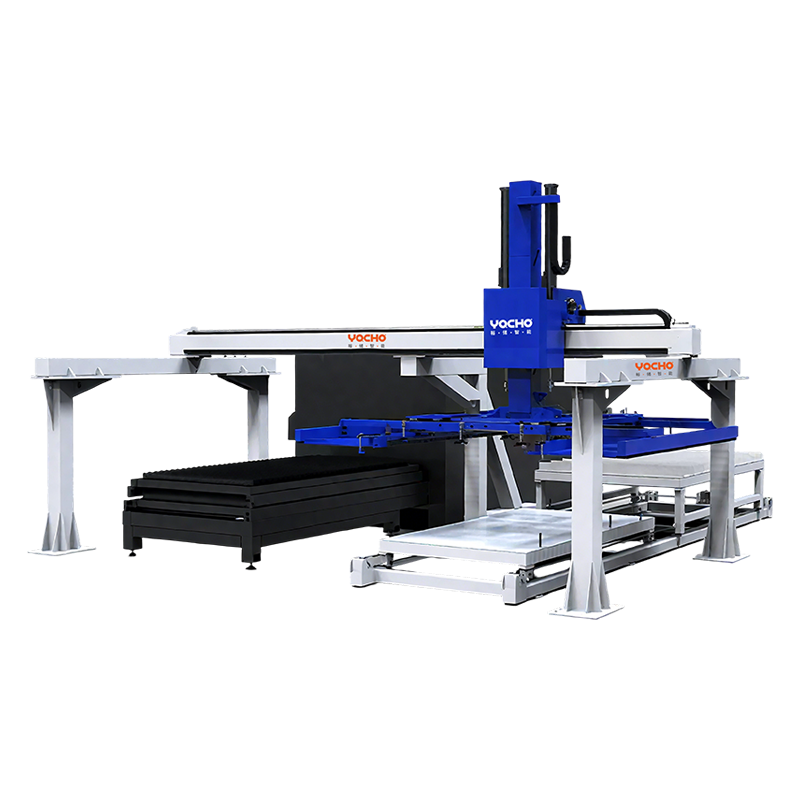
Cartesian or gantry-style manipulators move along linear X, Y, and Z axes, providing precise rectangular workspace coverage. These systems excel in applications requiring high repeatability over large working areas, such as machine tool loading or palletizing operations. The linear motion architecture simplifies programming and provides intuitive coordinate systems for operators.
Gantry systems can span multiple machines or workstations, servicing several production cells from a single manipulator installation. This configuration optimizes floor space utilization and reduces capital investment compared to deploying individual robots at each station. Load capacities range from light-duty applications handling a few kilograms to heavy-duty systems managing loads exceeding 500 kilograms.
Articulated Arm Manipulators
Articulated manipulators use rotary joints to create flexible, human-like arm movements with excellent reach and dexterity. Six-axis articulated robots provide the versatility to approach workpieces from multiple angles and navigate around obstacles in congested work cells. These robots handle complex loading tasks requiring precise orientation control or insertion operations.
Collaborative articulated manipulators incorporate safety features like force limiting and rounded surfaces that allow safe operation alongside human workers without safety caging. This capability proves valuable in applications where complete automation is impractical but assistance with heavy or repetitive tasks improves ergonomics and productivity. Payload capacities typically range from 3 kg to 35 kg for collaborative models and up to several hundred kilograms for traditional industrial articulated robots.
SCARA Manipulators
Selective Compliance Assembly Robot Arm (SCARA) manipulators feature horizontal articulated arms with vertical movement capability, optimized for high-speed pick-and-place operations. The design provides excellent rigidity in the vertical direction while allowing compliance in horizontal planes, making SCARA robots ideal for assembly insertion tasks and precise vertical placements.
SCARA configurations achieve faster cycle times than articulated robots for planar operations due to simpler kinematics and reduced moving mass. Common applications include electronics assembly, small parts handling, and loading components into molding or assembly fixtures. Work envelopes are generally smaller than articulated robots but perfectly suited to benchtop manufacturing operations.
Key Benefits and Advantages
Productivity Improvements
- Continuous 24/7 operation without breaks or fatigue-related performance degradation
- Consistent cycle times independent of shift, time of day, or operator skill variations
- Faster handling speeds compared to manual operations, particularly for repetitive tasks
- Reduced machine idle time through optimized loading sequences and simultaneous operations
- Ability to service multiple machines from a single manipulator, maximizing equipment utilization
Quality and Consistency
Intelligent manipulators maintain positioning accuracy within micrometers, ensuring consistent part placement that improves downstream process quality. Vision systems verify correct part orientation and detect defects before loading, preventing quality issues that could damage expensive tooling or create scrap. The elimination of human handling variability results in more predictable process outcomes and tighter quality control.
Integrated quality inspection capabilities allow manipulators to perform measurement tasks during handling operations, combining material movement with quality assurance functions. Data collection from sensors and vision systems creates comprehensive quality records that support statistical process control and traceability requirements without additional inspection stations or personnel.
Safety and Ergonomics
Automating heavy or awkward material handling eliminates ergonomic risks associated with repetitive lifting, reducing workplace injuries and associated costs. Workers transition from physically demanding roles to supervisory positions that monitor automation systems and handle exception conditions. This shift improves job satisfaction while reducing exposure to hazardous environments like high-temperature zones near furnaces or molding machines.
Advanced safety features including area scanners, light curtains, and collaborative operation modes ensure safe human-robot interaction when required. Emergency stop systems and collision detection prevent accidents, while safety-rated monitoring ensures compliance with occupational safety standards. The overall safety profile of automated cells typically exceeds manually operated equivalents.
Applications Across Industries
Machine Tool Loading
CNC machining centers require frequent loading of raw materials and unloading of finished parts, making them ideal candidates for manipulator automation. Intelligent systems handle parts from conveyors or pallets, load them into machine fixtures, remove completed parts, and place them in quality inspection stations or packaging areas. Vision systems accommodate part size variations and verify proper fixture seating before machining begins.
Integration with machine tool controls enables synchronized operations where the manipulator communicates with the CNC to coordinate door opening, chuck actuation, and cycle start commands. This coordination minimizes non-productive time and allows lights-out manufacturing where cells operate autonomously during unmanned shifts. Manipulators can service multiple machines in a cell, optimizing capital investment and floor space utilization.
Injection Molding and Casting
Molding operations benefit significantly from automated part removal and secondary operations handling. Manipulators extract molded parts from hot molds immediately after ejection, reducing cycle times by eliminating cool-down periods required for safe manual handling. The systems can perform in-mold operations like insert placement or degating while maintaining rapid cycle times.
Temperature-resistant end effectors and protective shrouding allow operation in extreme thermal environments near furnaces and hot chambers. Vision inspection identifies cosmetic defects or short shots immediately after molding, enabling rapid quality feedback and process adjustments. Automated systems handle parts consistently regardless of temperature, preventing the dimensional variations that can occur with manual handling of hot components.
Warehousing and Logistics
Distribution centers deploy intelligent manipulators for palletizing, depalletizing, and order fulfillment operations. Vision-guided systems handle mixed SKU palletizing where different products must be arranged in specific patterns. The flexibility to adapt to varying box sizes and weights without manual reconfiguration supports the diverse product mixes common in modern logistics.
Collaborative manipulators work alongside human pickers in fulfillment operations, handling heavy or bulky items while workers manage smaller products. This human-robot collaboration optimizes productivity while maintaining the flexibility required for variable order profiles. Integration with warehouse management systems ensures manipulators receive real-time task assignments aligned with overall facility operations.
Selection Criteria and Considerations
Payload and Reach Requirements
Accurately determining maximum payload including the workpiece weight plus end effector weight is critical for proper manipulator sizing. Insufficient payload capacity leads to reduced speed, decreased accuracy, and premature wear. Consider future product changes that might increase weight requirements to avoid early obsolescence of the automation investment.
Reach requirements depend on the physical layout of machines, conveyors, and part staging areas. Measure the maximum distance from the manipulator mounting location to all required pick and place positions, including vertical height requirements. Allow margin for obstacles and ensure the manipulator can achieve required orientations at all positions within the workspace.
Cycle Time and Speed Specifications
| Performance Factor | Typical Range | Impact on Selection |
| Cycle Time | 2-30 seconds per part | Determines required acceleration and velocity capabilities |
| Repeatability | ±0.02mm to ±0.5mm | Critical for precision assembly and tight fixture tolerances |
| Maximum Speed | 1-4 meters per second | Affects productivity for long-distance movements |
| Acceleration | 5-20 m/s² | Influences cycle time for short movements |
| Duty Cycle | 60-100% | Affects thermal management and component sizing |
Environmental Conditions
Operating environment significantly influences manipulator selection and configuration. High-temperature environments near furnaces or molding machines require special thermal protection, cooling systems, and temperature-resistant components. Cleanroom applications demand sealed designs with special materials that don't generate particulates and can withstand regular sanitization.
Harsh environments with dust, moisture, or corrosive chemicals need appropriate IP ratings and protective coatings. Food-grade applications require stainless steel construction and food-safe lubricants. Explosive atmospheres demand intrinsically safe or explosion-proof designs certified for the specific hazard classifications present in the facility.
Integration and Implementation
System Design and Layout
Successful implementation begins with detailed cell layout design that optimizes material flow, minimizes manipulator travel distances, and provides adequate access for maintenance and troubleshooting. Simulation software allows virtual commissioning where the entire cell operation is tested digitally before physical installation, identifying interference issues and optimizing cycle times.
Safety system design must address all potential hazards including pinch points, moving parts, and areas where humans might interact with the manipulator. Proper risk assessment following standards like ISO 12100 and ISO 10218 ensures comprehensive safety coverage. Physical guarding, safety scanners, and access control systems work together to protect personnel while maintaining productivity.
Programming and Training
Modern manipulators offer multiple programming methods including teach pendant programming, offline programming with simulation, and graphical programming interfaces that don't require specialized coding knowledge. Vision-guided systems often include simplified setup wizards for common tasks like pick-and-place operations. The programming approach should match the technical capabilities of the personnel who will maintain and modify the system.
Comprehensive training programs covering operation, basic troubleshooting, and routine maintenance ensure the workforce can effectively utilize the automation investment. Hands-on training with the actual equipment proves more effective than classroom-only instruction. Documenting standard operating procedures and creating quick reference guides supports knowledge retention and consistent operation across shifts.
Maintenance and Support
- Establish preventive maintenance schedules covering lubrication, wear component inspection, and calibration verification
- Stock critical spare parts including end effectors, sensors, and commonly replaced mechanical components
- Implement predictive maintenance using condition monitoring data from the control system
- Maintain vendor support agreements for technical assistance and software updates
- Document all modifications and maintain current program backups for rapid recovery
Return on Investment Considerations
Cost Analysis
Total investment includes the manipulator hardware, end effectors, vision systems, safety equipment, integration labor, and facility modifications. Basic systems start around $30,000-$50,000 for simple pick-and-place applications, while sophisticated multi-robot cells with advanced vision and integration can exceed $500,000. Accurate cost estimation requires detailed specification of all system components and integration requirements.
Operating costs include electrical power consumption, preventive maintenance, spare parts, and periodic calibration or certification requirements. These ongoing costs are generally modest compared to the labor savings achieved. Energy-efficient servo drives and optimized motion planning minimize power consumption, while quality components reduce maintenance frequency and costs.
Payback Calculation
Calculate payback by comparing automation costs against the value of displaced labor, productivity improvements, quality enhancements, and reduced scrap. A manipulator eliminating two shifts of manual loading typically achieves payback in 1-3 years depending on labor rates and system complexity. Additional benefits include capacity increases without facility expansion, reduced workers' compensation costs, and improved production flexibility.
Intangible benefits such as improved workplace safety, enhanced company image, and better employee morale from eliminating undesirable jobs contribute to overall value but are harder to quantify. Consider the strategic advantage of automation in maintaining competitiveness and the ability to meet customer quality and delivery expectations that might be difficult with manual operations.
Future Trends and Developments
Artificial intelligence and machine learning are advancing manipulator capabilities through improved object recognition, adaptive motion planning, and predictive maintenance. Systems learn optimal handling strategies through experience, continuously improving performance without explicit reprogramming. AI-powered quality inspection detects subtle defects beyond the capabilities of traditional rule-based vision systems.
Enhanced human-robot collaboration through improved safety sensing, intuitive programming interfaces, and adaptive behavior enables closer cooperation between workers and automation. Next-generation collaborative systems adjust speed and force limits dynamically based on human proximity, maximizing productivity while ensuring safety. Augmented reality interfaces allow operators to visualize robot paths and receive maintenance guidance through wearable displays.
Cloud connectivity and edge computing enable new capabilities including fleet management across multiple facilities, centralized performance monitoring, and rapid deployment of optimized programs across similar cells. Digital twin technology creates virtual replicas of physical systems for testing process changes and training operators without disrupting production. These technologies drive continuous improvement and help manufacturers maximize return on automation investments while adapting to evolving market demands.

If you are interested in our products, please consult us
PRODUCTS
NEWS CENTER
MOBILE TERMINAL

CONTACT US
- ADDRESS: Room 205, Office Building, Shandong Yurui Machinery Group Co., Ltd., at the intersection of Banqiao Road and Huangjin Road, Pingyi Street, Pingyi County, Linyi City, Shandong Province.
- PHONE: +86-19819101584
- EMAIL: [email protected]
Linyi Yocho Storage Intelligent Manufacturing Co.,Ltd. ALL RIGHTS RESERVED. ALL RESERVED. Warehouse Rack Manufacturers Warehouse Shelves Factory
