

 русский
 Español
 عربى
عربى
Long Material Storage Racks: Efficient Solutions for Industrial Use
 2026.02.19
 Industry News
Content
- 1 Long Material Storage Racks Maximize Space and Safety for Extended Inventory
- 2 Core Design Types and Structural Configurations
- 3 Load Capacity and Safety Compliance Standards
- 4 Space Optimization in High-Density Layouts
- 5 Material Compatibility and Protective Features
- 6 Integration with Inventory Management Systems
- 7 Installation Best Practices and Floor Requirements
- 8 Return on Investment and Operational Impact
Long Material Storage Racks Maximize Space and Safety for Extended Inventory
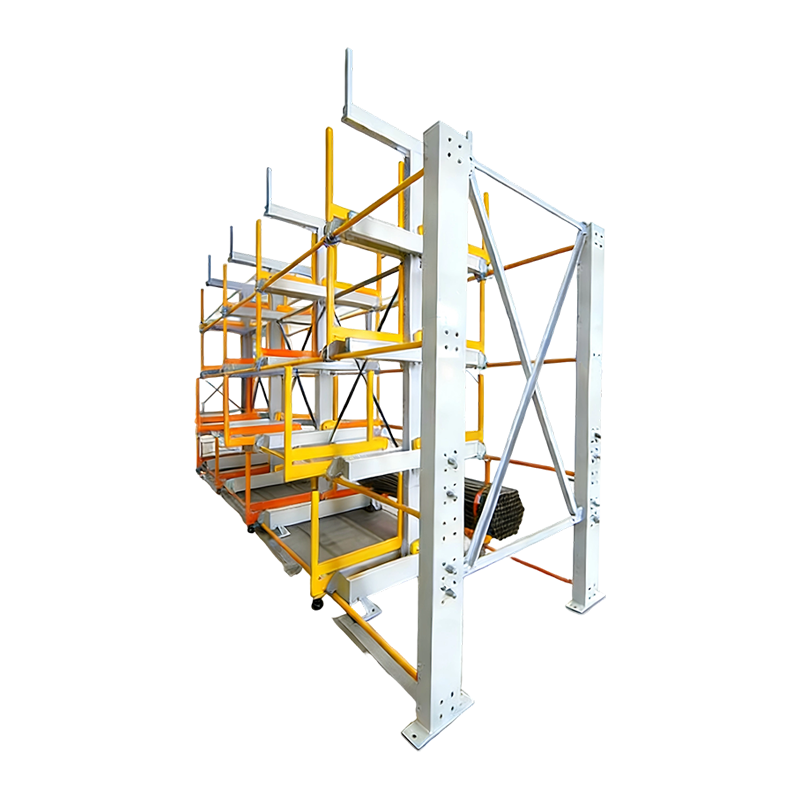
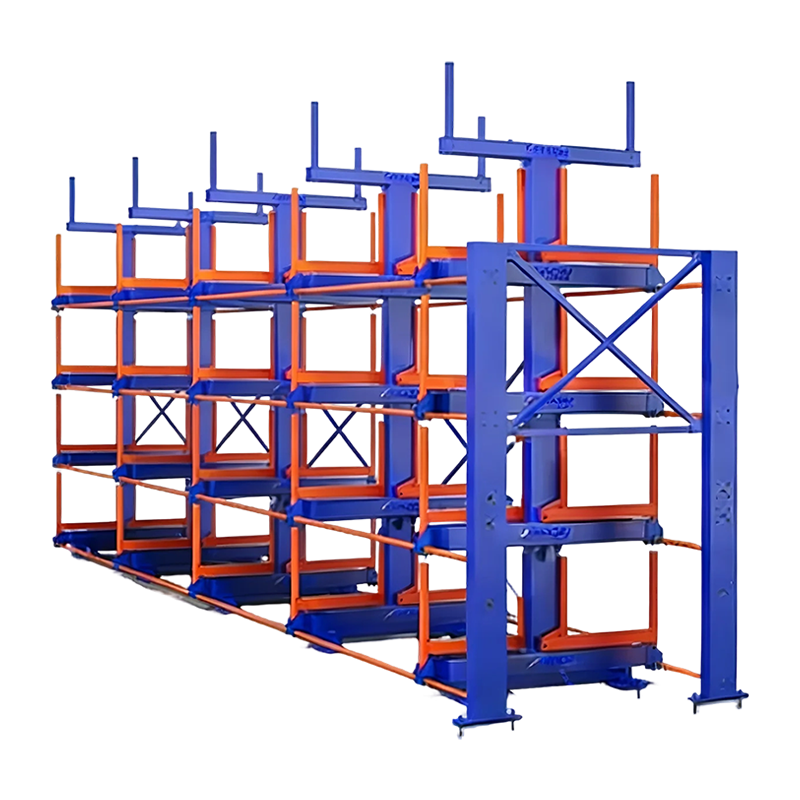
Long material storage racks are engineered specifically to hold oversized, linear items such as metal bars, plastic extrusions, wooden planks, and piping. Unlike standard pallet racking, these systems feature extended horizontal beams or cradles that support materials along their entire length, preventing sagging, warping, or roll-off. Facilities using purpose-built long material racks report up to 35% more usable floor space and a 50% reduction in handling injuries, according to a 2025 Material Handling Institute study. Their design directly addresses the inefficiencies of stacking long goods on the floor—a common but hazardous practice that impedes workflow and increases damage risk.
Core Design Types and Structural Configurations
There are three primary configurations of long material storage racks, each suited to different load types and operational needs:
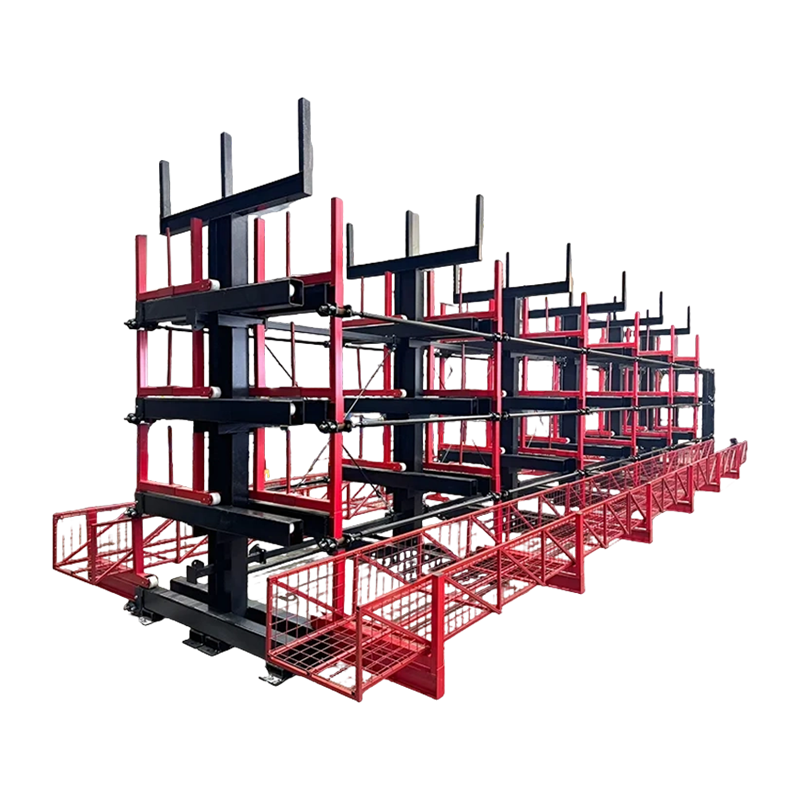
- Cantilever Racks: Feature arms extending from vertical columns, ideal for very long or irregularly shaped items like timber or steel beams. Load capacities range from 1,000 to over 10,000 lbs per arm.
- Panel Racks: Use vertical dividers to separate sheets or narrow profiles (e.g., aluminum channels), preventing contact and surface damage.
- Craddle-Style Beam Racks: Incorporate U-shaped or V-shaped supports on standard upright frames, optimized for round stock like pipes or tubes.
The choice depends on material dimensions, weight distribution, and access frequency. For instance, a fabrication shop handling 20-foot stainless steel rods would benefit most from adjustable cantilever arms with anti-slip coatings.
Load Capacity and Safety Compliance Standards
Safety is non-negotiable when storing heavy, elongated materials. Reputable long material racks comply with ANSI/RMI MH16.1 and FEM 10.2.02 standards, which govern load ratings, deflection limits, and seismic resilience. Each rack must be labeled with its maximum permissible load per level, accounting for dynamic forces during loading/unloading. Overloading can cause catastrophic failure—especially with cantilever systems where leverage amplifies stress. A 2024 OSHA report cited improper rack loading as a factor in 28% of warehouse material-handling incidents involving long stock. Regular inspections and certified engineering stamps are essential for compliance and risk mitigation.
Space Optimization in High-Density Layouts
One of the greatest advantages of long material racks is their ability to utilize vertical space without sacrificing accessibility. In a typical 20,000 sq ft metal service center, switching from floor stacking to double-sided cantilever racking increased storage capacity by over 40% while maintaining clear aisles for forklifts. Key layout strategies include:
- Aligning rack rows perpendicular to the longest wall to minimize turning radius
- Using variable arm spacing to accommodate mixed-length inventory
- Installing end stops and chain guards to prevent material displacement
Such optimizations reduce travel time for operators and lower the risk of product damage during retrieval.
Material Compatibility and Protective Features
Not all long materials behave the same under storage conditions. Wood may warp if unsupported; polished aluminum scratches easily; PVC pipes can deform under point loads. Therefore, modern racks incorporate protective elements tailored to material sensitivity:
| Material Type | Recommended Rack Feature |
|---|---|
| Steel Bar Stock | Powder-coated arms with rubber liners |
| Finished Lumber | Wide, flat arms with 2-inch spacing |
| Plastic Extrusions | Non-marring polyurethane cradles |
Integration with Inventory Management Systems
Modern long material storage is increasingly digitized. Racks can be outfitted with QR-coded labels or RFID tags linked to warehouse management systems (WMS), enabling real-time tracking of stock levels, locations, and turnover rates. For example, a construction supply distributor in Texas reduced picking errors by 92% after implementing barcode-scanned cantilever rack bays. This integration also supports FIFO (First-In, First-Out) protocols critical for time-sensitive materials like treated lumber or coated metals prone to degradation.
Installation Best Practices and Floor Requirements
Proper installation is crucial for structural integrity. Long material racks exert significant point loads on flooring, especially cantilever designs with high arm extensions. Concrete slabs must meet minimum specifications—typically 4,000 psi compressive strength with 6-inch thickness—and be free of cracks or unevenness. Anchor bolts should be installed per manufacturer torque specs, and aisle widths must accommodate both rack depth and equipment maneuverability. A common mistake is neglecting future expansion; modular systems allow bay additions without full reconfiguration, saving cost and downtime.
Return on Investment and Operational Impact
While initial investment in quality long material racks ranges from $3,000 to $15,000 per bay, the operational ROI is substantial. A Midwest pipe distributor documented a 27% increase in order fulfillment speed and a 60% drop in material damage claims within six months of installation. Beyond efficiency, these racks enhance workplace safety, reduce insurance premiums, and project professionalism to clients. For any facility handling linear inventory over 6 feet in length, dedicated long material storage racks are not just beneficial—they are essential for scalable, safe, and profitable operations.

If you are interested in our products, please consult us
PRODUCTS
NEWS CENTER
MOBILE TERMINAL

CONTACT US
- ADDRESS: Room 205, Office Building, Shandong Yurui Machinery Group Co., Ltd., at the intersection of Banqiao Road and Huangjin Road, Pingyi Street, Pingyi County, Linyi City, Shandong Province.
- PHONE: +86-19819101584
- EMAIL: [email protected]
Linyi Yocho Storage Intelligent Manufacturing Co.,Ltd. ALL RIGHTS RESERVED. ALL RESERVED. Warehouse Rack Manufacturers Warehouse Shelves Factory
