

 русский
 Español
 عربى
عربى
Maximize Space & Efficiency: The Ultimate Guide to Sheet Metal Storage Racks
 2025.08.27
 Industry News
1. Introduction
Storing sheet metal efficiently is one of the most common challenges faced by workshops, factories, and fabrication facilities. Due to its size, weight, and susceptibility to bending or scratching, improper storage can quickly lead to material damage, workplace hazards, and reduced operational efficiency.
Choosing the right sheet metal storage rack plays a critical role in solving these problems. A well-designed storage system not only protects your materials but also:
Maximizes available floor space
Improves accessibility and workflow
Enhances safety for workers
Reduces material handling time
Whether you run a small workshop or manage a large-scale manufacturing facility, understanding the different storage solutions and selecting the right one is essential for maintaining productivity and safety.
2. Types of Sheet Metal Storage Racks
Choosing the right storage rack depends on your available space, the volume of materials, and how frequently you need access to them. Below are the four most common types of sheet metal storage racks, along with their benefits and ideal applications.
2.1 Vertical Sheet Metal Racks
Vertical sheet metal racks store sheets in an upright position, making them easy to view and access. They’re especially effective in shops where space is limited and material variety is high.
Key Benefits:
Space-saving: Stores sheets vertically, freeing up valuable floor space.
Easy identification: Workers can quickly see and select different sheet types and sizes.
Reduced material damage: Less risk of bending or scratching compared to stacking.
Ideal Use Cases:
Smaller workshops with limited space
Facilities handling diverse sheet sizes and materials
Shops that require quick visual identification of sheets
2.2 Horizontal Sheet Metal Racks
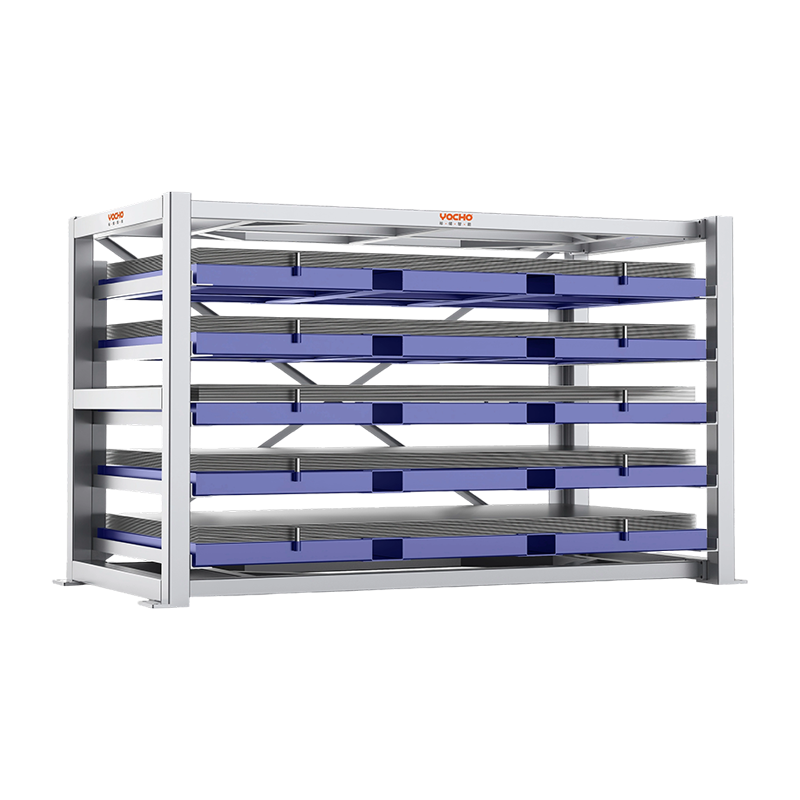
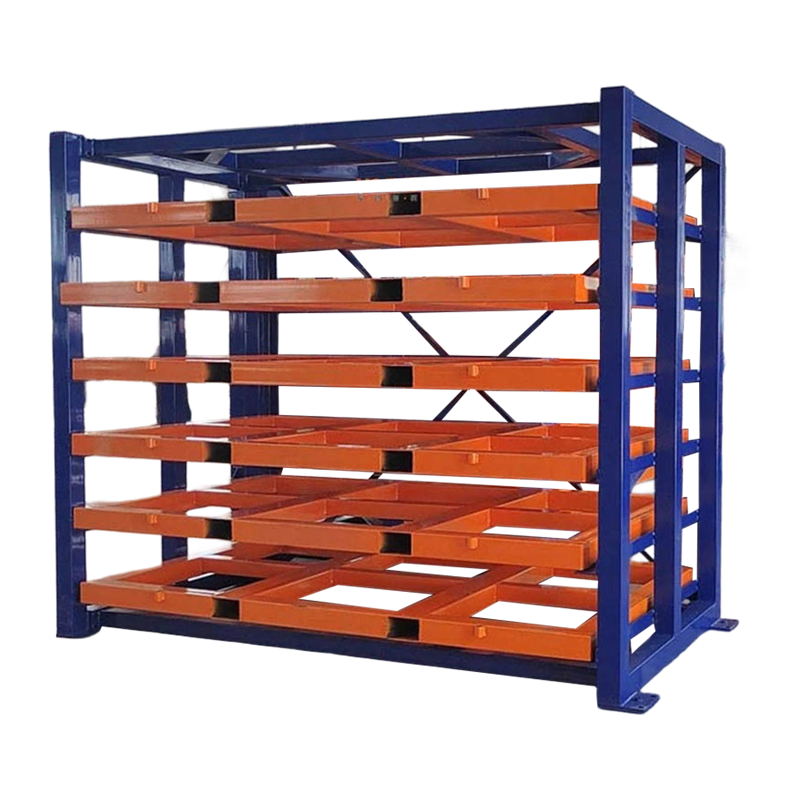
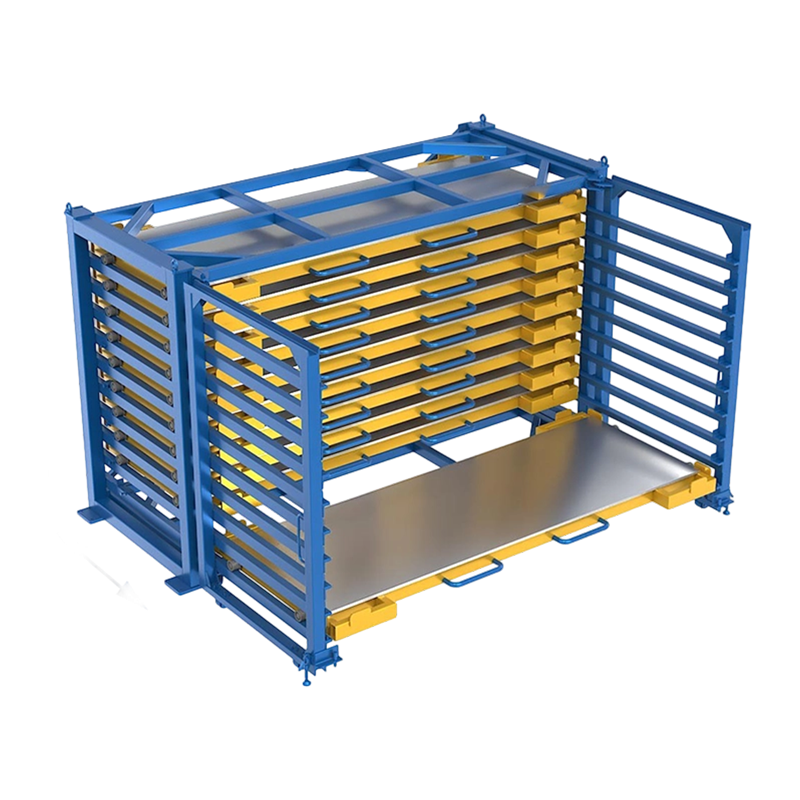
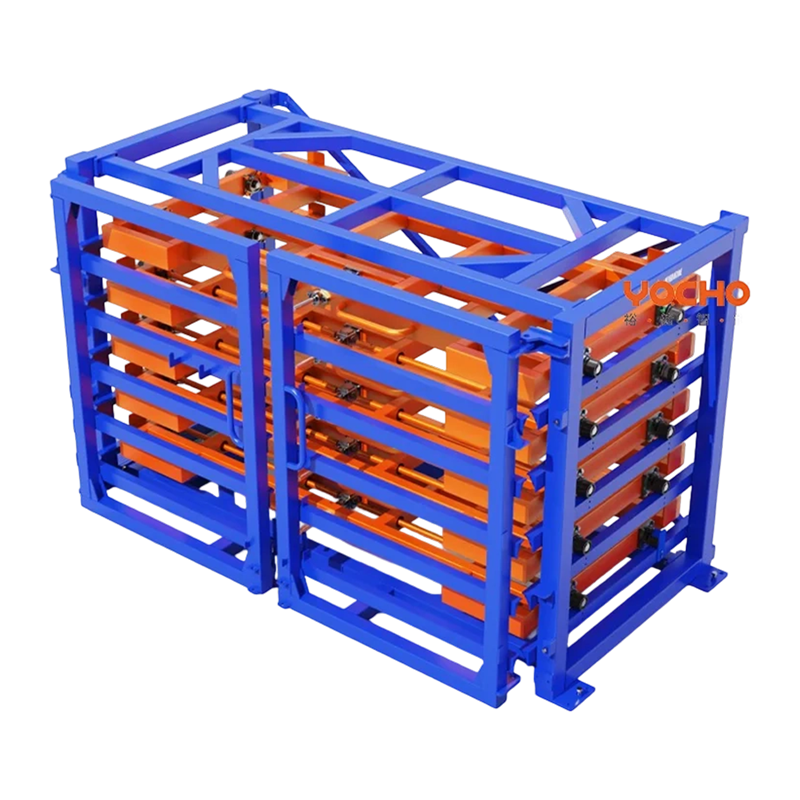
Horizontal racks store sheets flat in stacked layers, typically on pull-out shelves or trays. They’re perfect for facilities that handle high volumes of the same sheet size.
Key Benefits:
Quick access: Pull-out trays make loading and unloading easier.
Organized stacking: Prevents material warping by keeping sheets flat.
High capacity: Supports large quantities of uniform-sized sheets.
Ideal Use Cases:
High-volume metal fabrication shops
Warehouses storing large batches of standard-size sheets
Operations prioritizing efficient stacking and retrieval
2.3 Cantilever Racks
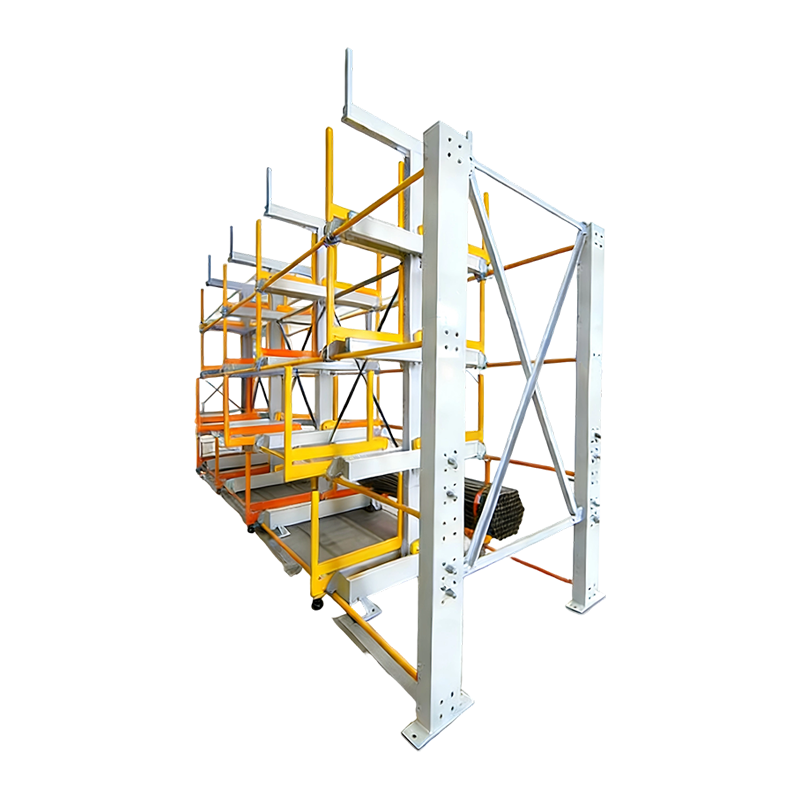
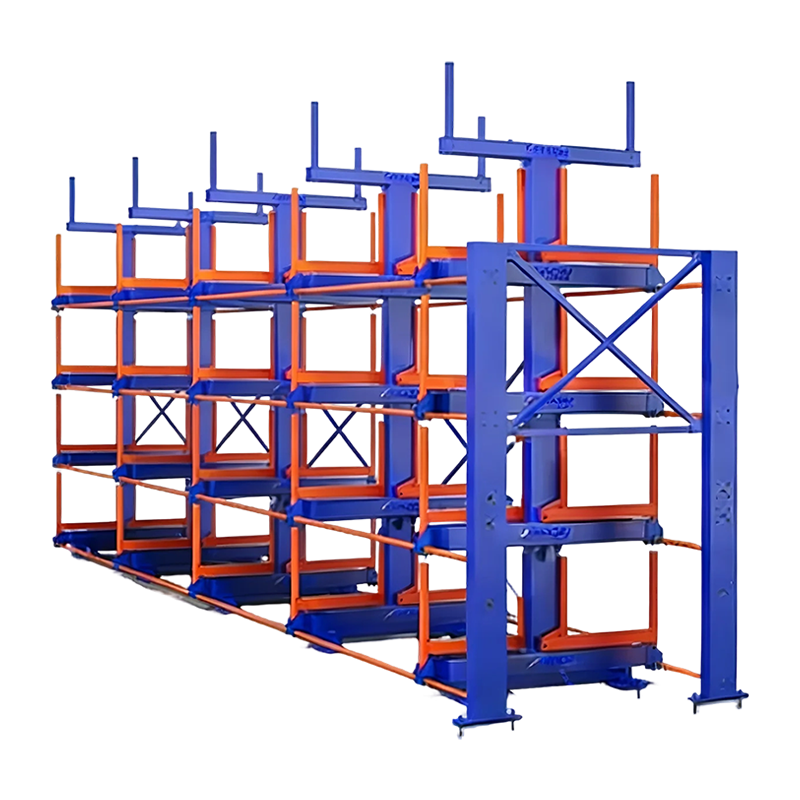
Cantilever racks are designed with extended arms to support heavy, long, or bulky materials like large sheet bundles, bars, pipes, and tubes. They are ideal for heavy-duty storage needs.
Key Benefits:
Handles heavy loads: Built for maximum strength and stability.
Flexible storage: Supports materials of varying lengths and thicknesses.
Open design: Allows easy access with forklifts or cranes.
Ideal Use Cases:
Large-scale manufacturing facilities
Storage of oversized sheets, bars, and tubes
Environments where forklift handling is common
2.4 Custom Sheet Metal Racks
Custom racks are designed to meet specific storage challenges and unique shop layouts. They are especially useful when standard solutions don’t fit your workflow.
Key Benefits:
Tailored design: Built to accommodate unique material sizes or storage requirements.
Optimized workflow: Designed to match your operational processes.
Enhanced efficiency: Reduces handling time and improves organization.
Ideal Use Cases:
Shops with irregularly sized materials
Facilities needing specialized safety or accessibility features
Businesses aiming to maximize storage efficiency
3. Factors to Consider When Choosing a Rack
Selecting the right sheet metal storage rack involves more than just picking a style. You need to evaluate your space, materials, weight requirements, and workflow to ensure the rack meets your operational needs. Below are the key factors to consider:
3.1 Available Space
Before selecting a rack, evaluate your shop’s layout and available storage area.
Tips:
Measure your space: Take accurate measurements of floor area, ceiling height, and door clearances.
Plan your layout: Position racks to allow smooth material flow and safe worker movement.
Think vertically: If floor space is limited, consider vertical racks or taller designs.
Example:
A small fabrication shop with limited floor space may benefit from vertical sheet metal racks to maximize storage without overcrowding the workspace.
3.2 Sheet Metal Sizes and Gauges
The size and thickness of your sheet metal determine the rack’s required dimensions and capacity.
Tips:
Know standard sheet sizes: Common sizes include 4'×8', 5'×10', and 6'×12'.
Match rack dimensions: Choose racks that can fully support your largest sheet size without overhang.
Consider gauges: Thicker sheets require stronger racks to handle higher loads.
Example:
If you primarily store 5'×10' aluminum sheets, select a horizontal rack designed to accommodate these dimensions safely.
3.3 Weight Capacity
Racks must be strong enough to hold the total weight of your materials without bending or failing.
Tips:
Calculate total load: Multiply sheet weight by the number of sheets per shelf or arm.
Check manufacturer specs: Always confirm the rack’s rated capacity per level and overall.
Avoid overloading: Distribute weight evenly to maintain rack stability.
Example:
A bundle of 50 mild steel sheets measuring 4'×8' and 16 gauge can weigh over 3,000 lbs — requiring a heavy-duty rack rated for that load.
3.4 Accessibility Needs
Consider how often workers need to access materials and how easy it is to load and unload them.
Tips:
High-frequency access: Use racks with pull-out trays or open designs.
Forklift-friendly setups: Ensure racks allow clear entry points for machinery.
Workflow optimization: Position racks close to cutting, bending, or welding stations to reduce handling time.
Example:
For a high-volume fabrication shop, horizontal racks with sliding shelves improve efficiency by minimizing manual lifting.
3.5 Safety Features
Safety should always be a top priority when selecting storage solutions.
Tips:
Install safety barriers: Prevent accidental tipping or sliding of sheets.
Use proper labeling: Mark load limits, sheet sizes, and safety zones clearly.
Select stable designs: Ensure the rack has a wide base and meets OSHA safety guidelines.
Example:
A custom rack with locking arms and built-in guards can significantly reduce the risk of sheet slippage in busy workshops.
4. Installation and Maintenance Tips
Proper installation and regular maintenance of your sheet metal storage racks are essential for safety, efficiency, and longevity. A poorly installed or neglected rack can lead to material damage, workplace hazards, and unexpected downtime. Follow these best practices to ensure your storage system remains reliable and secure.
4.1 Proper Installation Guidelines
Installing your racks correctly ensures stability and minimizes safety risks.
Steps for Proper Installation:
Prepare the storage area:
Clear the floor of obstacles, debris, or uneven surfaces.
Ensure the floor can handle the rack’s load-bearing requirements.
Follow manufacturer instructions:
Refer to the installation manual for precise measurements and assembly steps.
Use the recommended bolts, anchors, and supports.
Anchor racks securely:
Always secure racks to the floor or wall if required.
Use heavy-duty anchors for concrete floors.
Ensure proper spacing:
Leave adequate space between racks for forklifts, carts, and personnel movement.
Verify stability:
Test the rack after installation by loading small weights gradually before full capacity use.
Pro Tip: For large installations, consider hiring a professional installer to ensure compliance with safety regulations and load-bearing standards.
4.2 Regular Inspection and Maintenance
Routine checks help prevent accidents, extend rack life, and maintain workplace safety.
Maintenance Checklist:
Visual inspections: Look for cracks, bent frames, loose bolts, or rust.
Load-bearing test: Verify that shelves and arms are not sagging or deforming.
Check for corrosion: Clean and repaint any affected areas to prevent further damage.
Lubricate moving parts: For racks with pull-out trays or sliding shelves, apply grease regularly.
Replace worn components: Swap out damaged brackets, supports, or safety pins immediately.
Recommended Schedule:
Weekly: Quick visual inspection for obvious damage.
Monthly: Check bolts, anchors, and shelf stability.
Annually: Full structural inspection by a qualified technician.
4.3 Load Distribution Best Practices
Improper loading is one of the most common causes of rack failure and material damage.
Tips for Safe Load Distribution:
Heaviest items on lower levels: Lower the rack’s center of gravity for better stability.
Distribute weight evenly: Avoid overloading one side or one shelf.
Stack sheets correctly: Use wooden blocks or spacers to prevent surface scratches.
Follow rated capacities: Never exceed the manufacturer’s specified limits per shelf or per arm.
Example:
If your horizontal rack has a 2,000 lb per-shelf rating, avoid stacking 2,500 lbs on one tray — distribute the load across multiple shelves instead.
5. Safety Guidelines for Using Sheet Metal Racks
Proper safety practices are essential when storing, loading, and retrieving sheet metal. Because sheet metal is often heavy, sharp, and difficult to maneuver, accidents can occur if workers are not trained or the racks are misused. Following these safety guidelines will help protect workers, materials, and equipment.
5.1 Safe Loading and Unloading Procedures
Improper loading is one of the leading causes of workplace injuries and rack damage.
Best Practices:
Plan before lifting:
Know the weight and size of the sheet before moving it.
Use team lifting or equipment for heavier sheets.
Use proper lifting techniques:
Keep your back straight and lift with your legs.
Avoid twisting your body while carrying sheets.
Secure materials properly:
Place sheets fully on the rack supports without overhang.
Use spacers to prevent sheets from sliding or scratching.
Avoid overstacking:
Never exceed the rack’s rated load capacity.
Keep weight balanced to prevent tipping.
Pro Tip: For bundles over 200 lbs, always use forklifts, hoists, or mechanical lifters instead of manual handling.
5.2 Proper PPE (Personal Protective Equipment)
Sheet metal edges can be sharp, and heavy sheets pose lifting risks. Wearing the right PPE significantly reduces workplace injuries.
Recommended PPE:
Gloves: Cut-resistant gloves to protect against sharp edges.
Safety shoes: Steel-toe boots to prevent foot injuries.
Eye protection: Safety goggles or face shields when cutting or grinding sheets.
Long sleeves and pants: To protect arms and legs from scratches and cuts.
Hard hats: For overhead loading areas or multi-tiered storage systems.
5.3 Training and Awareness for Workers
Even the safest racks can pose risks if workers aren’t properly trained.
Training Checklist:
Rack usage training: Teach workers how to load, unload, and handle sheets safely.
Emergency procedures: Train staff on what to do if a sheet slips or a rack becomes unstable.
Weight limit awareness: Clearly display the rack’s maximum load capacity.
Equipment operation: Provide forklift and hoist training for heavy sheet handling.
Tip: Conduct regular safety drills and refresh training sessions every 6–12 months to maintain awareness.
5.4 Additional Safety Tips
Install anti-slip flooring around storage areas to prevent accidents.
Use safety barriers or guardrails around high-traffic zones.
Label racks clearly with sheet sizes, weights, and load limits.
Keep aisles clear for forklifts and workers.
Schedule regular rack inspections to detect potential hazards early.
6. Benefits of Using Sheet Metal Storage Racks
Investing in the right sheet metal storage racks isn’t just about organization — it’s about improving workflow efficiency, reducing material damage, and ensuring workplace safety. Whether you run a small workshop or a large manufacturing facility, the right storage system provides long-term operational and financial advantages.
6.1 Improved Space Utilization
Sheet metal racks help maximize your available floor space by storing materials vertically, horizontally, or in multi-tiered systems.
Benefits:
Free up valuable production areas for machinery and workstations.
Keep materials organized and easy to locate.
Allow better use of vertical space in smaller workshops.
Example:
A fabrication shop switched from floor-stacked storage to vertical racks and gained 30% more usable workspace without expanding its facility.
6.2 Better Organization and Inventory Management
With a proper storage system, materials are sorted by size, thickness, or type, making inventory management much simpler.
Benefits:
Faster sheet identification and retrieval.
Reduced time spent searching for materials.
Easier stock tracking and restocking.
Example:
Horizontal racks with labeled pull-out trays allow workers to find the correct sheet in seconds, improving overall productivity.
6.3 Increased Efficiency and Productivity
Efficient material storage reduces unnecessary handling and optimizes workflow.
Benefits:
Minimize material handling time.
Position racks closer to cutting, bending, or welding stations.
Improve production speed and reduce bottlenecks.
Example:
A metal shop using cantilever racks positioned near cutting machines reported a 25% reduction in material handling time.
6.4 Reduced Material Damage and Waste
Improper stacking and storage can lead to scratched, bent, or warped sheets, which directly increases costs.
Benefits:
Protect sheets from physical damage.
Reduce unnecessary replacements and waste.
Ensure quality materials are always ready for use.
Example:
Custom racks with rubber-coated supports helped one manufacturer cut material waste by 15% annually.
6.5 Enhanced Workplace Safety
Safety is a major concern when handling heavy sheet metal. The right racks minimize risks by improving stability and reducing manual lifting.
Benefits:
Lower risk of slips, trips, and falling sheets.
Create safer pathways for workers and forklifts.
Ensure compliance with OSHA and other safety regulations.
Example:
By upgrading to secured vertical racks with locking arms, a facility reduced workplace incidents by 40% within six months
7. Conclusion
Efficient sheet metal storage is more than just keeping materials organized — it directly impacts productivity, safety, and overall profitability. Choosing the right storage rack helps you:
Maximize available floor space
Improve workflow and material accessibility
Protect sheets from damage and waste
Enhance workplace safety and compliance
Boost overall operational efficiency
Whether you manage a small workshop or a large manufacturing facility, investing in the right sheet metal storage solution ensures smoother operations and long-term cost savings.
Take time to evaluate your space, material types, and workflow requirements before selecting a rack. The right storage system not only keeps your shop organized but also creates a safer, more productive environment for your team.

If you are interested in our products, please consult us
PRODUCTS
NEWS CENTER
MOBILE TERMINAL

CONTACT US
- ADDRESS: Room 205, Office Building, Shandong Yurui Machinery Group Co., Ltd., at the intersection of Banqiao Road and Huangjin Road, Pingyi Street, Pingyi County, Linyi City, Shandong Province.
- PHONE: +86-19819101584
- EMAIL: [email protected]
Linyi Yocho Storage Intelligent Manufacturing Co.,Ltd. ALL RIGHTS RESERVED. ALL RESERVED. Warehouse Rack Manufacturers Warehouse Shelves Factory
