

 русский
 Español
 عربى
عربى
How to Improve Warehouse Efficiency in Manufacturing Operations
 2026.05.15
 Industry News
Content
- 1 The Real Cost of Warehouse Inefficiency in Manufacturing Operations
- 2 Start with the Layout: How Space Design Drives Throughput
- 3 Storage Density as an Efficiency Lever: More Than Just Space Saving
- 4 Reduce Material Waiting Time with Automated Storage and Retrieval
- 5 Intelligent Loading and Unloading: The Missing Link in Warehouse Flow
- 6 Measure, Improve, Repeat: KPIs That Actually Matter in Industrial Warehousing
The Real Cost of Warehouse Inefficiency in Manufacturing Operations
In most manufacturing facilities, the production line gets the attention. Machines are monitored, cycle times are tracked, and downtime is measured to the minute. The warehouse directly behind it operates on gut feeling and institutional memory—and absorbs costs that never appear on any efficiency dashboard.
The numbers tell a different story when someone looks. Studies across industrial operations consistently find that production workers spend between 20 and 30 percent of their time not producing—searching for materials, waiting for a forklift to retrieve the right sheet from a buried stack, or staging components in hallways because the storage area is full. In a facility running two shifts, that translates to four or more hours of lost output per worker per day. Across a team of ten, it is a second facility's worth of labor capacity, consumed entirely by friction.
Three metrics define warehouse efficiency in manufacturing contexts more precisely than any general checklist:
- Material waiting time — the average elapsed time between a production request and material arriving at the machine or workstation. In disorganized warehouses, this routinely exceeds 15 minutes per retrieval. In well-configured intelligent storage environments, it drops below 90 seconds.
- Floor utilization rate — the percentage of available floor area contributing to productive storage. Industry benchmarks suggest most conventional manufacturing warehouses operate at 40–55% utilization. High-density vertical storage systems routinely push this above 85%.
- Pick accuracy rate — the proportion of retrievals that deliver the correct material specification on the first attempt. Manual searching from unlabeled stacks consistently produces error rates of 3–8%. Automated retrieval systems with integrated inventory management typically achieve 99%+.
Improving warehouse efficiency in a manufacturing context is not a housekeeping exercise. It is a production capacity decision. Every minute of reduced material waiting time is a minute of recovered output, without adding a single machine or hiring a single operator.
Start with the Layout: How Space Design Drives Throughput
Before investing in any equipment or software, the most impactful warehouse efficiency intervention is often the cheapest: redesigning how space flows. Poor layout creates invisible friction that compounds across every operation, every shift, every day.
The foundational principle is directional logic. Materials should move through a warehouse in one consistent direction—from receiving through storage to dispatch—without crossing their own path or competing for aisle access with opposing flows. The U-shaped warehouse layout achieves this cleanly: receiving docks sit at one end of the U, shipping docks at the other, and storage occupies the curved middle. Personnel and forklifts circulate in a single direction, eliminating the head-on conflicts that slow traffic in linear or I-shaped facilities.
For manufacturing warehouses handling sheet metal, plate stock, pipe, and tube—materials that are large, heavy, and difficult to maneuver—aisle width deserves particular attention. Aisles optimized for the turning radius of the forklift types in use, rather than set to a generic standard, recover meaningful floor space while maintaining full operational clearance. In facilities with side-loading forklifts designed for long material handling, aisle widths can often be reduced by 30–40% compared to configurations designed for counterbalance trucks.
Slotting strategy—deciding which materials live where in the warehouse—is the second major layout lever. ABC analysis classifies inventory by retrieval frequency: A items (retrieved daily or multiple times per shift) belong closest to the dispatch point or production entry. B items (weekly retrieval) occupy mid-distance positions. C items (monthly or slower) can occupy the furthest, least accessible locations. This simple principle, applied consistently, can reduce average travel distance per retrieval by 25–40% with no capital investment beyond a physical reorganization.
Finally, vertical space is the most systematically underused asset in manufacturing warehouses. Facilities that store sheet metal flat on the floor or in low-profile cantilever racks are typically utilizing 15–25% of available cubic volume. Rethinking storage orientation—from horizontal to vertical, from floor-level to multi-tier—is the gateway to the density improvements covered in the next section.
Storage Density as an Efficiency Lever: More Than Just Space Saving
Storage density is typically discussed as a space problem: too much inventory, too little floor area. In manufacturing warehouses, it is more accurately an efficiency problem. Low-density storage forces longer travel distances, more difficult retrieval sequences, higher rates of material damage during handling, and slower response times between storage and production. Improving density solves all of these simultaneously.
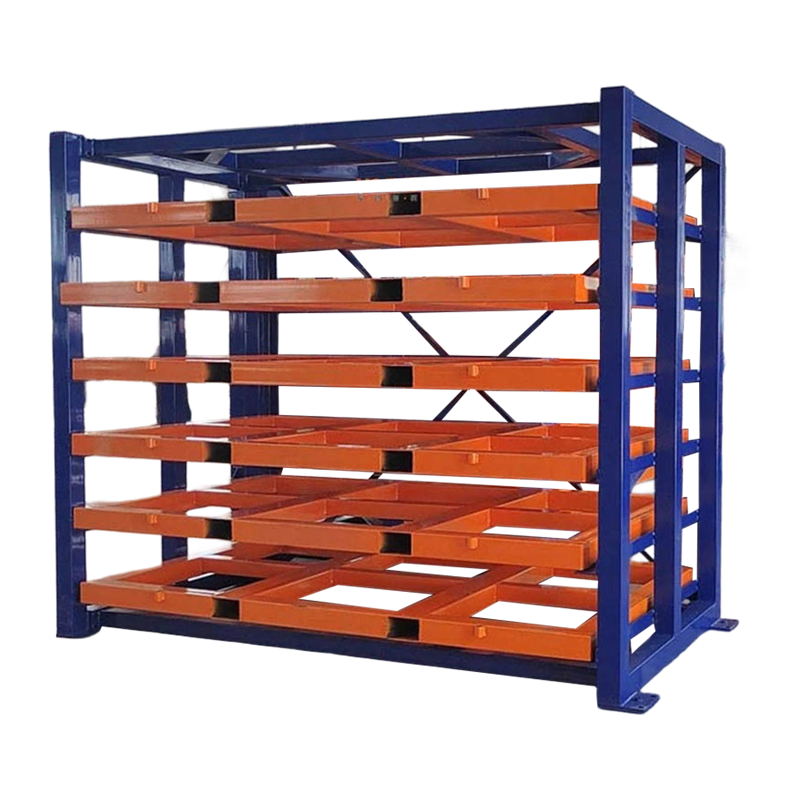
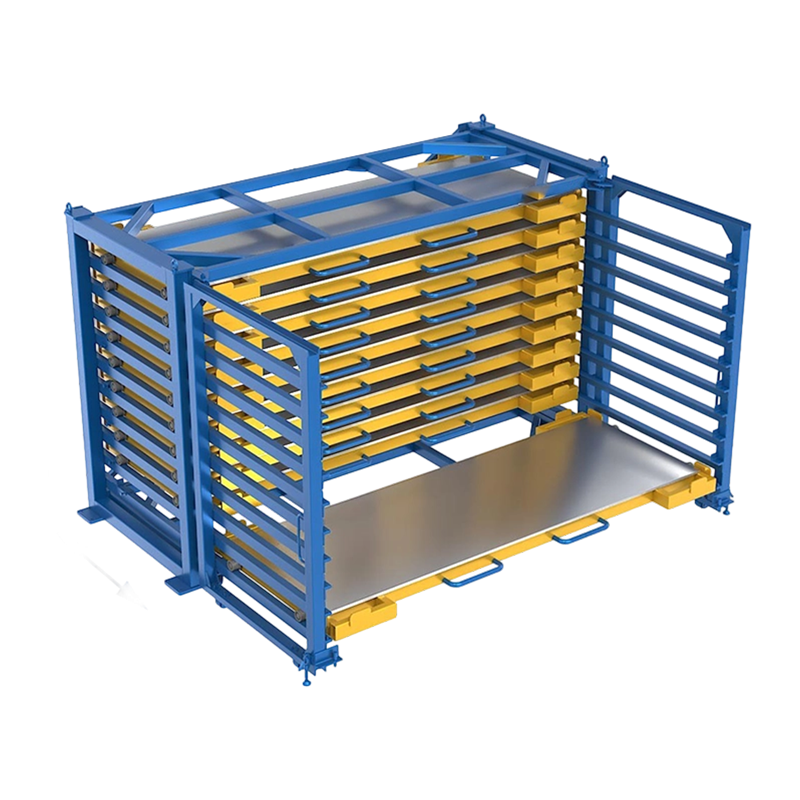
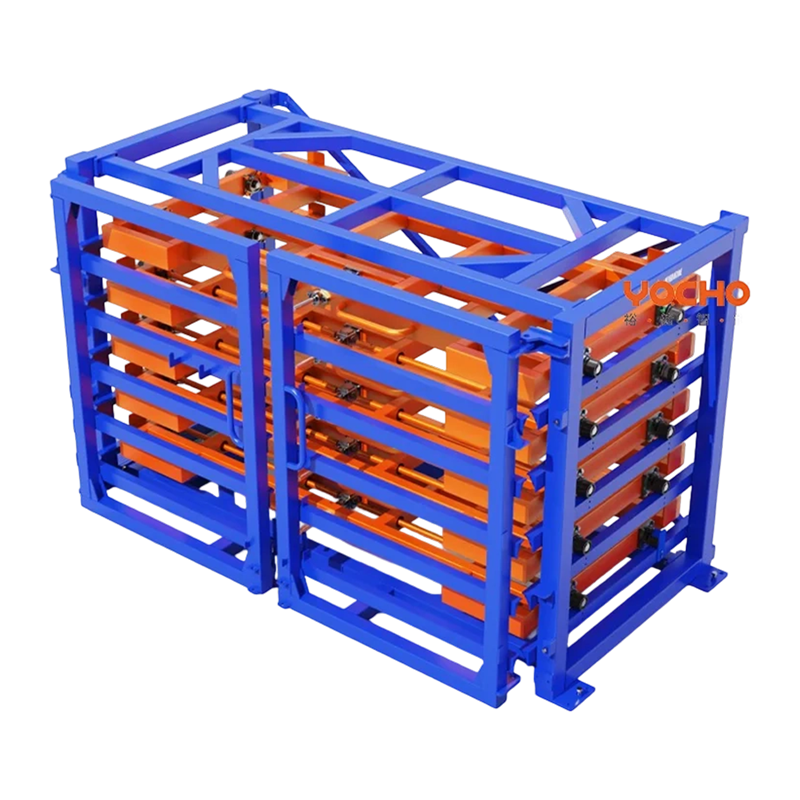
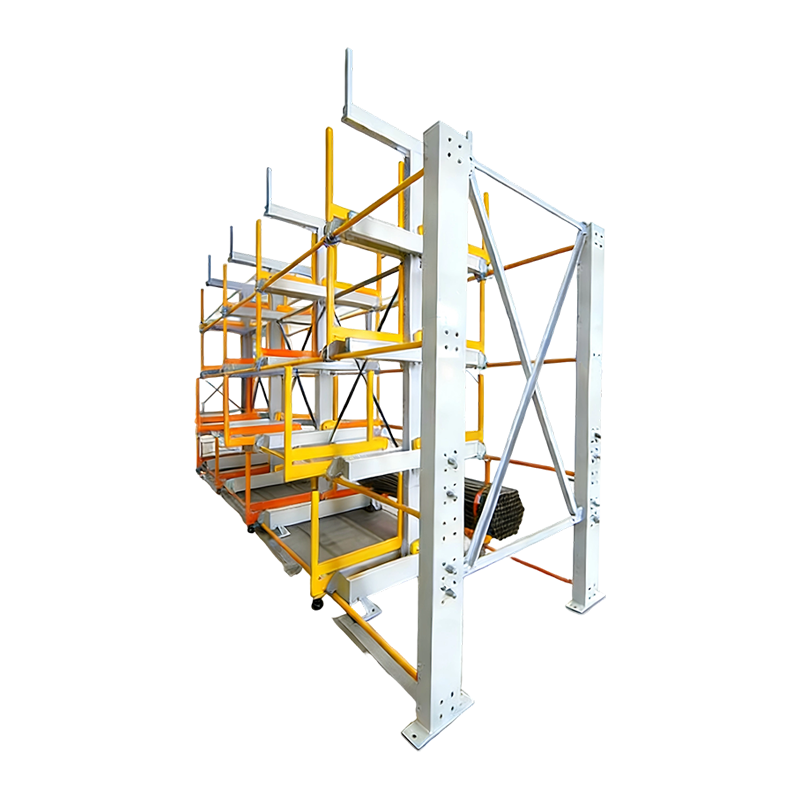
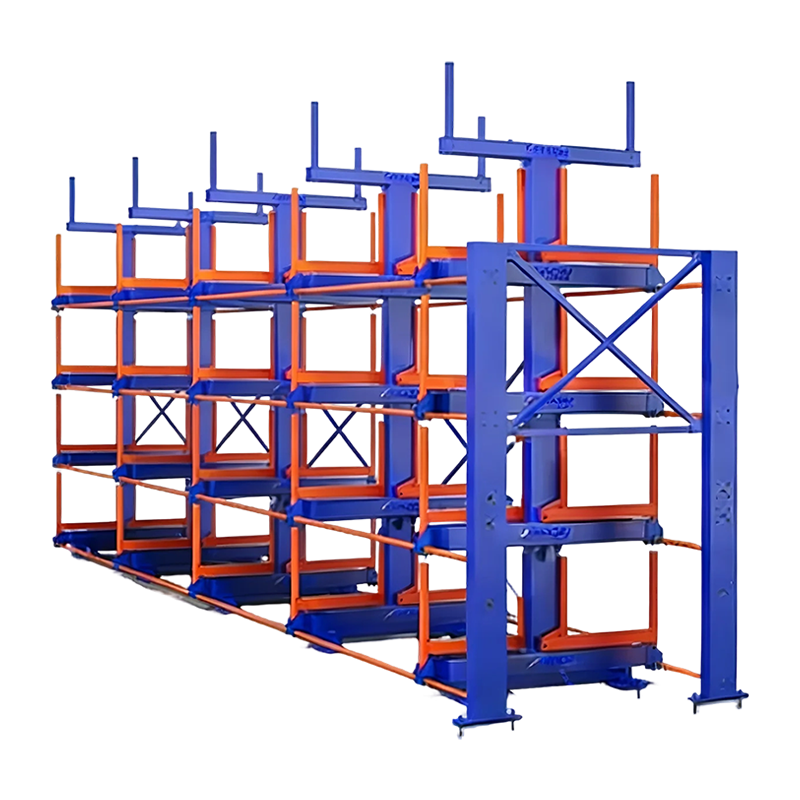
The comparison between conventional and high-density storage is stark in plate and sheet metal applications. A conventional approach—flat stacks on the floor, separated by material type—typically yields five to eight storage positions per square meter of floor area, requires a forklift to excavate buried sheets, and provides no visibility into what is stored where without manual inspection. A drawer-style or cassette-based vertical storage rack for the same footprint delivers fifteen to twenty-five positions per square meter, allows single-operator access with full material visibility, and supports retrieval of any position without disturbing adjacent stock.
| Storage Method | Floor Utilization | Retrieval Time (per pick) | Operators Required | Material Visibility |
|---|---|---|---|---|
| Flat floor stacking | Low (15–25%) | 10–20 min | 2–3 | None without inspection |
| Standard cantilever rack | Moderate (35–50%) | 5–10 min | 1–2 | Partial (top layers only) |
| Drawer/cassette vertical rack | High (70–85%) | 2–5 min | 1 | Full (all positions) |
| Automated intelligent storage | Very High (85%+) | <90 seconds | 0 (operator at terminal) | Complete (software-tracked) |
The efficiency gain from higher density is not linear—it is compounding. When retrieval time drops from fifteen minutes to ninety seconds, the same forklift operator can serve ten times as many production requests per shift. When all material positions are visible and software-tracked, picking errors fall to near zero, eliminating the rework and production delays caused by wrong-specification material reaching a machine. The automated sheet metal storage systems for high-density manufacturing warehouses that integrate inventory control with physical retrieval represent the most complete realization of this principle—but significant efficiency gains are available at every point along the density improvement curve, including manual high-density rack systems.
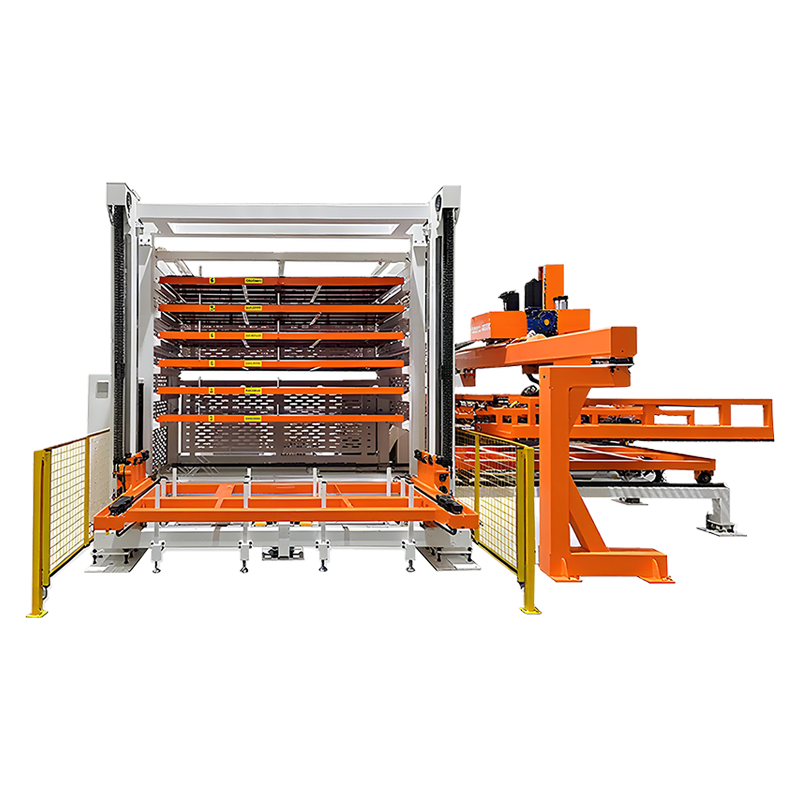
Reduce Material Waiting Time with Automated Storage and Retrieval
Material waiting time is the efficiency gap that most warehouse improvement initiatives fail to close, because closing it requires more than reorganization—it requires changing how retrieval is initiated and executed. In manual warehouses, a production request triggers a human search sequence: locate the material on a paper or spreadsheet list, navigate to the storage area, identify the correct position, physically extract the material, transport it to the machine. Each step has inherent variability. Total elapsed time is rarely under ten minutes and frequently exceeds twenty.
Automated Storage and Retrieval Systems (AS/RS) invert this sequence. The operator enters a material specification at a terminal. The system identifies the correct storage position from its real-time inventory record, sends the retrieval mechanism—crane, shuttle, or conveyor—to that position, extracts the material, and delivers it to the output station. Total elapsed time: sixty to ninety seconds, with near-zero variability between cycles.
For plate and sheet metal specifically, AS/RS implementations offer additional operational advantages beyond speed. Automatic weight detection at intake identifies whether incoming material matches its documented specification before it enters the storage system—preventing misidentified stock from disrupting production hours or days later. Automatic warehouse-in confirmation eliminates manual data entry, removing the transcription errors that corrupt inventory records in paper-based systems. First-in, first-out retrieval sequencing is enforced by software rather than relying on staff to manually rotate stock, which is critical for facilities working with materials that have limited shelf life or oxidation sensitivity.
The reliability question—how often do automated systems fail, and what happens when they do?—is the most common concern from facilities evaluating this transition. A detailed analysis of how secure and reliable automated storage systems are in daily industrial operations addresses this directly: well-maintained AS/RS installations typically achieve uptime rates above 98%, and facilities that invest in redundant retrieval pathways and scheduled preventive maintenance rarely experience unplanned downtime lasting more than a single shift. For most manufacturing operations, this reliability profile compares favorably with the consistent daily losses from manual inefficiency.
Intelligent Loading and Unloading: The Missing Link in Warehouse Flow
Warehouse efficiency discussions focus heavily on storage and retrieval. The loading and unloading operations at either end of the storage process—moving material from delivery vehicles into the warehouse, and from the warehouse to production machinery—receive far less attention. They are also, in many facilities, the largest single source of material waiting time and damage.
Manual loading and unloading of heavy sheet metal, tube, and plate stock is physically demanding, slow, and inherently variable. Cycle time depends on the number of available workers, their fatigue level across the shift, the specific material dimensions involved, and the condition of the receiving area. In facilities with peak delivery periods or high material turnover, manual unloading creates a backlog that the downstream storage and retrieval system—however well-configured—cannot absorb. The bottleneck is not in storage. It is at the dock.
Intelligent loading and unloading manipulators—robotic systems designed specifically for heavy material handling at warehouse entry and exit points—address this bottleneck at its source. By automating the physical transfer of sheets, plates, and tubes between delivery positions and storage system inputs, these systems decouple warehouse throughput from human labor availability. They operate at consistent cycle times regardless of shift timing, fatigue factors, or staffing levels, and they apply precisely controlled grip force and movement paths that reduce material surface damage during handling. A comprehensive breakdown of how intelligent loading and unloading manipulators work in manufacturing environments covers their integration with stamping, welding, and assembly operations in detail.
The connection between loading/unloading automation and overall warehouse efficiency is often underestimated because the two systems appear separate. In practice, they function as a pipeline: the throughput capacity of the warehouse is limited by the slowest segment. Installing a high-speed AS/RS without addressing dock bottlenecks is like widening a highway that feeds into a single-lane bridge. Treating the full material flow—from dock to storage to production—as one integrated system is the perspective that generates the largest efficiency gains.
Measure, Improve, Repeat: KPIs That Actually Matter in Industrial Warehousing
Sustainable warehouse efficiency improvement is not a project with an end date. It is an operating discipline, and like any discipline, it requires measurement to remain honest. The challenge for manufacturing warehouses is that most generic warehouse KPI frameworks were designed for e-commerce or distribution contexts—where the key metric is orders per hour—and translate poorly to environments where the primary output is materials delivered to machines at the right time in the right specification.
The KPIs that drive meaningful decisions in industrial manufacturing warehouses are:
- Retrieval cycle time — average elapsed time from production material request to delivery at the machine or workstation. This is the headline efficiency number. Track it by material category, shift, and operator to identify where variability is highest and why.
- Location utilization rate — percentage of available storage positions currently occupied. Below 60% suggests underinvestment in storage capacity or poor slotting discipline. Above 95% creates bottlenecks when new stock arrives and limits the ability to reorganize for efficiency. The operational sweet spot is 75–85%.
- Pick accuracy rate — proportion of retrievals delivering the correct material specification without correction. Track rejections at the machine as the most reliable data source, since operators rarely formally log errors that they quietly correct themselves. A rate below 97% indicates a systemic slotting or labeling problem.
- Throughput tonnage per shift — for metal processing facilities specifically, total weight of material handled per operating shift provides a production-relevant efficiency measure that normalizes across varying material types and dimensions.
- Dock-to-stock time — elapsed time from material delivery at the receiving dock to confirmed storage in an accessible, system-tracked position. Long dock-to-stock times indicate either intake bottlenecks or inventory recording delays that create "ghost inventory"—material physically present but not findable in the system.
The 5S methodology—Sort, Set in Order, Shine, Standardize, Sustain—provides a practical organizational framework for maintaining the physical conditions that make these KPIs improvable. In a manufacturing warehouse context, Sort eliminates obsolete tooling, damaged packaging, and unneeded fixtures that consume storage positions. Set in Order establishes labeled, assigned locations for every material category. Shine means regular inspection of rack structures, floor conditions, and handling equipment. Standardize locks the improved configuration into written operating procedures. Sustain builds audit schedules that prevent the natural entropy of a busy warehouse from erasing the gains.
The most important operational principle, however, is simpler than any framework: review the numbers at a fixed frequency—weekly at minimum, daily for high-throughput operations—and act on what they show within the same review cycle. Warehouses that track KPIs without acting on deviations gain the cost of measurement without its benefit. The cycle of measure, diagnose, adjust, and remeasure is the mechanism that converts a one-time efficiency improvement into a permanently higher operating baseline.
Improving warehouse efficiency in a manufacturing operation is rarely about a single dramatic intervention. It is about compounding small, specific improvements across layout, storage density, retrieval automation, dock handling, and measurement discipline—each one building on the last until the sum is a facility that produces more, wastes less, and loses no output to friction that was always preventable.

If you are interested in our products, please consult us
PRODUCTS
NEWS CENTER
MOBILE TERMINAL

CONTACT US
- ADDRESS: Room 205, Office Building, Shandong Yurui Machinery Group Co., Ltd., at the intersection of Banqiao Road and Huangjin Road, Pingyi Street, Pingyi County, Linyi City, Shandong Province.
- PHONE: +86-19819101584
- EMAIL: [email protected]
Linyi Yocho Storage Intelligent Manufacturing Co.,Ltd. ALL RIGHTS RESERVED. ALL RESERVED. Warehouse Rack Manufacturers Warehouse Shelves Factory
